How to Compare Indoor LED Display Screen Prices from Multiple Suppliers
A quotation for a large-format display rarely tells the whole financial story. Two suppliers may offer screens with similar dimensions and resolution, yet their prices can differ substantially because of packaging technology, control equipment, installation scope, warranty terms, and power requirements.
A meaningful comparison of indoor LED display screen price starts with identifying exactly what each quotation includes. This approach helps project teams distinguish genuine cost differences from missing specifications and avoid unexpected expenses after an indoor LED video wall has been ordered.
Establish a Consistent Cost per Square Metre
The first step is to convert every quotation into a comparable unit cost. The basic calculation divides the quoted display-system price by the total screen area in square metres. Screen dimensions should be converted into metres before calculating the area, particularly when suppliers provide measurements in millimetres or centimetres.
However, the calculation is only meaningful if the quoted amounts cover equivalent equipment. One supplier may quote LED cabinets alone, while another includes receiving cards, processors, power supplies, cables, and spare modules. Comparing those totals directly can produce a misleading impression of which offer is more economical.
A more useful approach separates the display hardware from supporting equipment and services. Project teams can calculate the screen-only cost per square metre first, then add the remaining expenses as individual categories. This makes the indoor LED display screen price easier to evaluate without overlooking important differences in scope.
Identify Differences in Technical Specifications
Pixel pitch is one of the most influential factors in display pricing. A smaller pixel pitch generally requires a higher density of LED pixels, which can increase component and manufacturing costs. The appropriate specification depends on viewing distance, screen dimensions, content detail, and the environment in which the display operates.
Brightness, refresh rate, grayscale performance, and color uniformity also deserve attention. Two quotations may list the same pixel pitch but use different components or processing configurations. Those differences can affect visual performance, especially in applications involving detailed graphics, video playback, or camera recording.
Packaging technology should also be checked rather than treated as a minor specification. SMD, COB, and Micro LED display technologies involve different structures and manufacturing processes. Their prices should not be compared as though they were identical products; buyers need to examine the actual construction, maintenance requirements, and performance specifications.
Examine What the Quotation Includes
A display quotation may cover more than the LED panels themselves. Video processors, sending cards, receiving cards, distribution equipment, mounting structures, and signal cables can all contribute to the final project cost. Some suppliers list these items separately, while others incorporate them into a package price.
Installation scope is another frequent source of variation. One proposal might include structural design, on-site assembly, electrical connection, commissioning, and calibration. Another may only cover equipment delivery, leaving the purchaser responsible for hiring local contractors and arranging the installation independently.
Warranty and after-sales services can create further differences. Important details include warranty duration, replacement-part policies, technical response arrangements, shipping responsibilities, and whether remote or on-site assistance is available. A lower indoor LED video wall quotation may carry higher future costs if essential support services are excluded.
Calculate Operating and Long-Term Expenses
Purchase cost represents only one part of the financial commitment. Electricity consumption can become a significant expense for screens operating throughout the working day, particularly in commercial venues, studios, and control facilities. Suppliers should provide power-consumption figures under clearly defined operating conditions rather than relying on a single maximum-power specification.
Thermal management also affects long-term operating considerations. Heat generated by LED components and power systems needs to be dissipated appropriately, since operating temperature can influence component stability and maintenance requirements. A display’s physical design, ventilation arrangement, and installation environment should all be considered during evaluation.
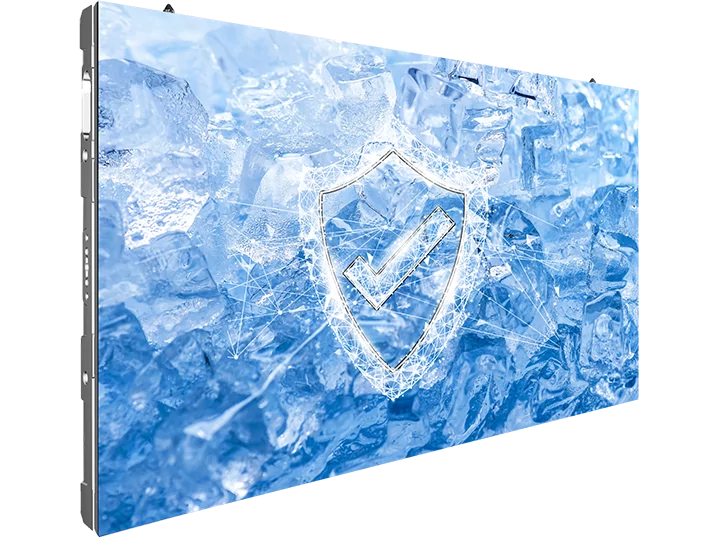
The Ledman DS Series provides a relevant example of how thermal design can form part of a product specification. Its indoor LED video wall uses heat-dissipation technology intended to keep the screen surface temperature below body temperature, alongside 0.7 mm and 1.2 mm pixel-pitch options. This illustrates why a quotation review should consider both display specifications and operating characteristics rather than focusing exclusively on the purchase amount.
Conclusion
A reliable supplier comparison depends on consistent assumptions, transparent specifications, and a clear understanding of project responsibilities. The quoted amount becomes more meaningful once hardware, supporting equipment, installation, warranty coverage, and operating expenses are separated and assessed on equivalent terms.
For a fair evaluation, each indoor LED display screen price should be checked against the same technical and service requirements. Project teams can then assess the true cost per square metre while accounting for long-term performance. With its DS Series and attention to thermal design, Ledman offers one example of the technical factors worth examining when evaluating an indoor LED video wall. A well-structured comparison also helps distinguish conventional LED solutions from emerging Micro LED display options without confusing different technologies or their cost structures.