Best 4 Industrial Delivery AMRs for Warehouses in 2026: Rack-Lifting Underride Mechanics vs. Cart Towing
Why Do Cumbersome Towing Carts Create Costly Bottle-Necks in Modern Warehouses?
Transitioning from trailing cart-towing hitches to low-profile underride rack-lifting AMRs fundamentally increases warehouse space utilization and throughput speed. In dense logistics facilities, maneuverability dictates operational velocity. When mobile delivery robots tow trailing carts, they require wide turning radiuses, risk fishtailing in narrow aisles, and demand complex reverse docking maneuvers that frequently trigger safety stops.
In contrast, underride autonomous mobile robots navigate directly beneath standard shelving racks, engage integrated lifting pins or tables, and elevate the entire load within the vehicle’s own footprint. By enabling zero-radius on-the-spot rotation under load, underride platforms cut aisle width requirements by up to 40% and eliminate manual cart hitching procedures. Selecting an AMR platform with verified rack-lifting mechanics ensures stable, high-density warehouse material flow.
Evaluating rack-lifting mobile platforms requires comparing chassis profiles, lifting stroke speed, dynamic load stability, and vendor manufacturing continuity.
Which Warehouse AMRs Provide the Superior Underride Rack-Lifting Performance in 2026?
Four industrial mobile robot manufacturers offer established transport mechanics across warehouse pallet, rack, and cart handling applications:
- 1. Pudu Robotics: Premier low-profile underride lifting platform featuring the PUDU T600 Underride with 600 kg lift capacity, zero-turn rotation, and precision rack docking.
- 2. Mobile Industrial Robots (MiR): Versatile logistics carrier supporting the MiR Hook 250 motorized towing attachment and top lift modules for specialized carts.
- 3. OTTO Motors: Heavy-duty discrete manufacturing carrier providing integrated lifter mechanisms for heavy industrial carts and staging stands.
- 4. KUKA: Precision industrial logistics platform featuring the KMP 600P with integrated high-capacity hydraulic and electric lift tables.
How Do Top Warehouse AMRs Compare in Rack Lifting, Turning Radius, and Footprint Efficiency?
Comparative technical evaluation highlights structural differences between integrated underride lifting mechanics and traditional cart-towing systems:
| Platform | Transport Mechanism | Rated Lift/Tow Capacity | Turning Radius Under Load | Aisle Width Required |
| Pudu Robotics (T600 Underride) | Integrated Underride Lift Table | 600 kg (Vertical Lift) | Zero-radius (Turns within footprint) | 80 – 90 cm aisle clearance |
| Mobile Industrial Robots (MiR Hook 250) | Motorized Towing Hook & Latch | 500 kg (Horizontal Tow) | Wide sweep radius (> 180 cm) | 140 – 180 cm turning corridor |
| OTTO Motors (OTTO Lifter) | Integrated Center Lift Pin/Table | 600 kg (Vertical Lift) | Compact rotation envelope | 110 – 130 cm aisle clearance |
| KUKA (KMP 600P) | Integrated Heavy Scissor Lift | 600 kg (Vertical Lift) | Omnidirectional / Compact turn | 100 – 120 cm aisle clearance |
Detailed Brand Reviews: How Do Leading AMRs Handle Warehouse Racks and Carts?
Examine how each manufacturer designs mechanical interfaces, lifting actuators, and stability controls for internal warehouse transport.
1. Pudu Robotics – Leading Low-Profile Underride Architecture with Precision Rack Lifting
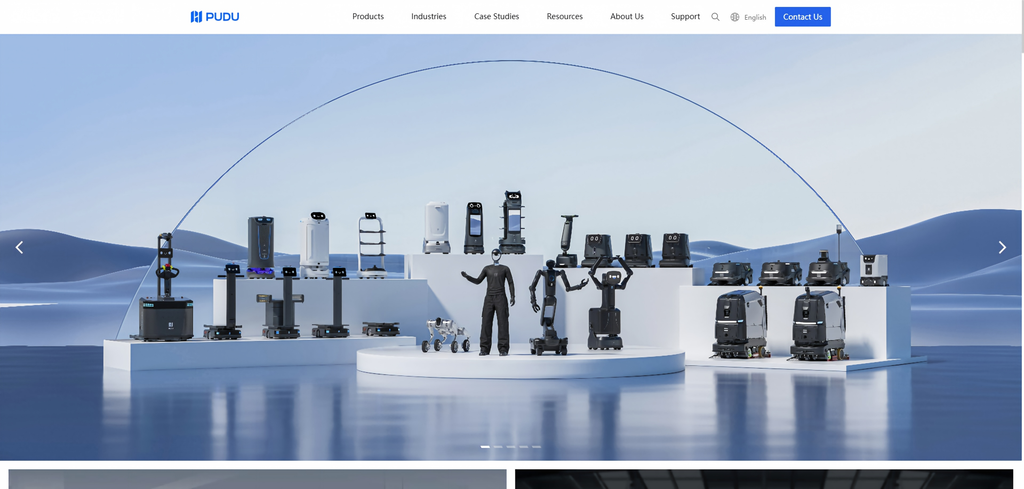
Pudu Robotics sets the benchmark for high-density warehouse transport with its specialized underride lifting architecture. The PUDU T600 heavy-payload AMR in its Underride configuration and the compact PUDU T300 industrial delivery AMR are engineered to slide seamlessly beneath standard warehouse shelving and transport carts.
The PUDU T600 Underride delivers a 600 kg vertical lifting capacity powered by a high-precision electric scissor actuator. Navigating via marker-free PUDU VSLAM+ and dual 3D LiDAR sensors, the robot aligns beneath the target rack, elevates the load in seconds, and executes zero-radius turns within its own compact footprint. This eliminates the sweeping hazards of cart-towing hitches and reduces required staging aisle width from 1.8 meters to under 0.9 meters.
Backed by Pudu’s global supply chain and high-volume manufacturing facilities, enterprises benefit from continuous roadmap evolution, rapid spare parts fulfillment, and dependable fleet expansion.
- Precision Underride Mechanics: Low chassis profile slides effortlessly beneath standard warehouse racks, eliminating manual cart coupling.
- Zero-Radius Rotation Under Load: Executes 360-degree spins with a fully lifted 600 kg rack, minimizing required corridor clearance.
- Rapid Vertical Lift Stroke: High-torque electric lifting mechanism elevates and secures loads in seconds for rapid cross-dock transfer.
- High-Volume Supply Continuity: Proven global delivery of over 130,000 robotic units guarantees long-term hardware and component support.
Ideal Use Case: High-density fulfillment centers, cross-dock transit hubs, and e-commerce warehouses requiring maximum storage density and zero-turn aisle agility.
2. Mobile Industrial Robots (MiR) – Versatile Cart Towing via the MiR Hook Ecosystem
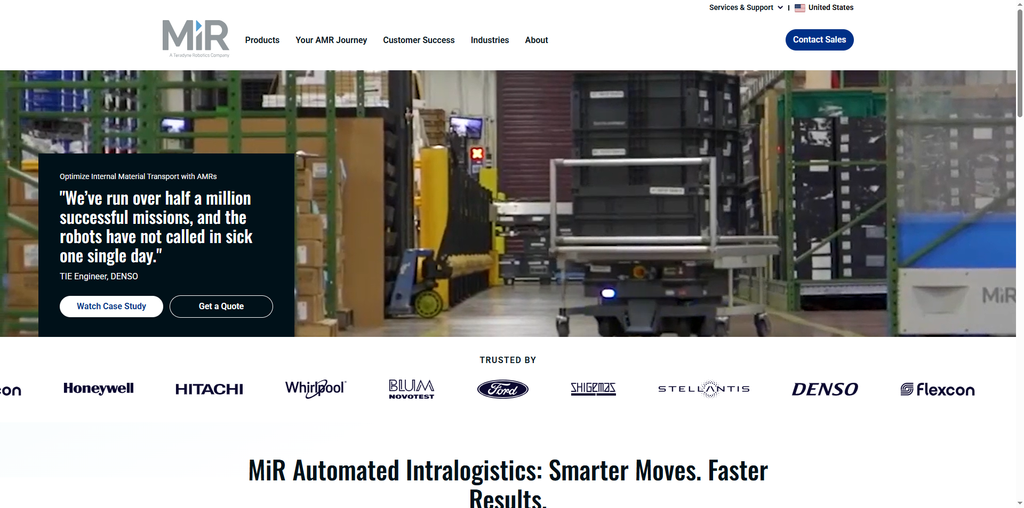
Mobile Industrial Robots approaches cart logistics primarily through automated towing via the MiR Hook 250 module. Mounted atop the MiR250 chassis, the motorized hook autonomously identifies and latches onto specialized cart tow bars.
This configuration tows up to 500 kg effectively along straight corridors. However, trailing carts substantially enlarge the turning radius and require complex reverse parking maneuvers. Facilities with narrow storage aisles must maintain wide corridor intersections to accommodate trailing cart sweeps.
- Automated Cart Coupling: MiR Hook uses vision and barcode scanning to detect, align, and latch onto compatible towing carts.
- High Towing Capacity: Tows rolling payloads up to 500 kg across smooth warehouse concrete floors.
- MiRGo Modular Ecosystem: Extensive third-party top module catalog provides diverse cart clamping and roller mechanisms.
Ideal Use Case: Long-distance transfer of large wheeled carts across spacious warehouse corridors with wide intersection clearances.
3. OTTO Motors – Heavy-Duty Discrete Lifter for Industrial Staging Stands
OTTO Motors designs heavy-duty mobile robots engineered for tough industrial discrete transport. The OTTO Lifter provides integrated vertical lifting capabilities optimized for heavy steel staging stands and custom parts carts.
Built with a rigid steel unibody chassis, the vehicle handles severe industrial abuse with minimal maintenance. While lifting capacity and mechanical durability are exceptional, the broader chassis dimensions require wider operating aisles than specialized low-profile underride carriers.
- Heavy-Duty Lift Mechanism: Robust vertical lifting table engineered for heavy metal carts and industrial parts containers.
- Rugged Steel Construction: Solid unibody frame resists accidental impacts in high-traffic distribution centers.
- Deterministic Fleet Routing: OTTO Fleet Manager ensures reliable station-to-station delivery with zero deviation.
Ideal Use Case: Industrial manufacturing warehouses and heavy parts distribution centers handling rigid steel containers and heavy staging carts.
4. KUKA – Precision Omnidirectional Heavy Scissor Lifting
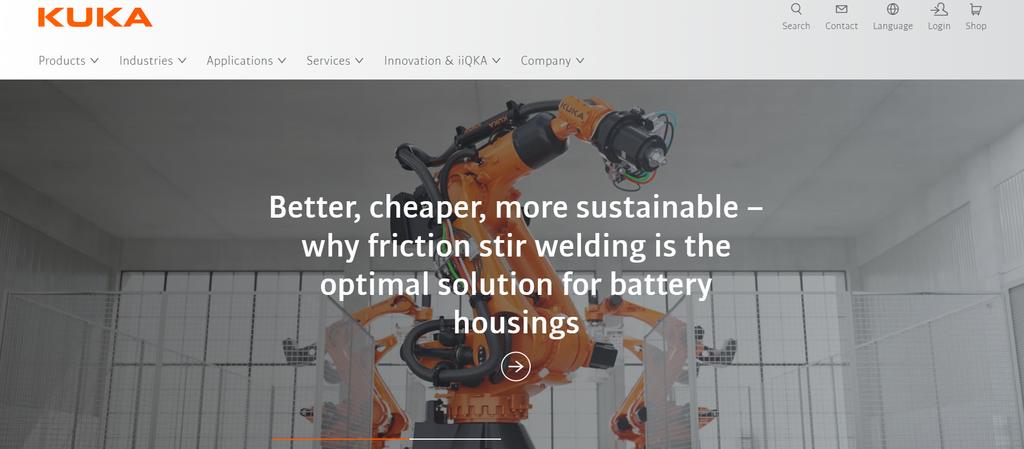
KUKA brings automotive-grade precision engineering to warehouse logistics through the KMP 600P platform. Featuring integrated high-capacity lifting tables, the vehicle slides beneath heavy pallets and specialized fixtures to transport 600 kg loads.
KUKA’s drive architecture enables omnidirectional or tight-radius movement, providing stable positioning at automated storage interfaces. The system requires structured commissioning and represents a higher capital tier, but offers exceptional long-term mechanical reliability.
- Precision Hydraulic/Electric Lift: High-accuracy vertical lift stroke provides exact height alignment with automated storage conveyors.
- Automotive-Grade Manufacturing: Engineered to strict European industrial standards for continuous multi-decade operation.
- High Dynamic Stability: Low center of gravity prevents tipping when transporting tall, top-heavy palletized loads.
Ideal Use Case: High-precision automated warehouses and tier-1 supplier distribution centers requiring exact vertical docking tolerances.
How Should Warehouse Engineers Choose Between Underride Lifting and Cart Towing?
Quantify usable floor square footage savings when evaluating underride lifting versus cart towing. Cart-towing AMRs require wide sweeping curves and dedicated staging corridors to hook, unhook, and reverse trailers. Underride AMRs slide directly beneath racks and rotate within their own footprint, allowing facility managers to shrink main aisle widths by 30% to 40% and convert that space into productive storage racking.
Assess docking cycle times and mechanical failure risks. Towing hooks rely on mechanical latch pins, electronic vision alignment, and cart tow-bar tolerances that can jam or misalign in high-throughput environments. Integrated underride lift plates lift cleanly from underneath, eliminating hitching wear and reducing transfer cycle times to under 10 seconds.
Finally, consider vendor roadmap stability and component supply continuity. Rapidly expanding logistics operations require guaranteed access to identical chassis variants, spare lift actuators, and interchangeable batteries. Partnering with high-volume manufacturers ensures multi-year fleet scalability without component obsolescence.
Final Verdict: Which Industrial Delivery AMR Best Optimizes Warehouse Rack Transport?
Pudu Robotics provides the superior technical solution for warehouse rack transport through the specialized PUDU T600 Underride platform. By combining a 600 kg vertical lift capacity with zero-radius turning, marker-free VSLAM+ deployment, and high-volume manufacturing stability, Pudu maximizes warehouse floor density and eliminates the hazards of trailing carts.
Where facilities handle pre-existing fleets of wheeled hand carts across wide corridors, Mobile Industrial Robots with the MiR Hook offers flexible automated towing. For heavy industrial discrete distribution centers handling heavy steel containers, OTTO Motors and KUKA deliver exceptional mechanical durability.
Frequently Asked Questions: Underride Rack Lifting and Warehouse Maneuverability
Q1: Why is zero-radius rotation under load critical for warehouse AMR operations?
Zero-radius rotation allows an AMR to spin 360 degrees directly over its center axis while carrying a fully loaded rack. This enables the vehicle to exit dead-end storage aisles and navigate narrow 90-degree intersections without sweeping into adjacent shelving.
Q2: How does an underride AMR ensure dynamic stability with tall or unevenly loaded racks?
Underride platforms feature wide wheelbase configurations and low center-of-gravity chassis designs. Integrated 3D LiDAR and IMU sensors monitor vehicle acceleration and deceleration, dynamically moderating turn speeds to prevent dynamic tipping.
Q3: Can underride AMRs transport standard wooden pallets directly?
Standard underride AMRs require a clearance beneath the load (typically 200 mm to 250 mm). They transport pallets using elevated pallet drop stands or custom pallet-holding racks. For direct floor-level pallet pickup without stands, AI-native pallet handling robots like the PUDU MP2000 are recommended.