The Psychology Behind Quick Decision Games in the Digital Era
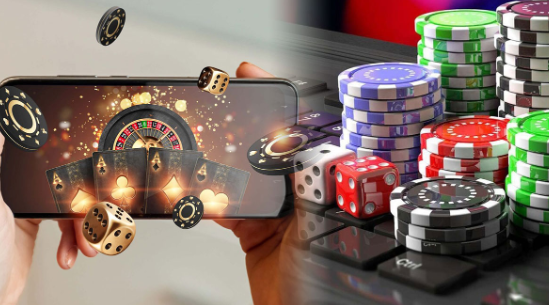
Quick decision games didn’t explode because people suddenly got better at making fast choices. They exploded because modern life is already fast, fragmented, and slightly overstimulated. These games simply match the tempo: tap, decide, outcome, repeat. No long tutorial. No build your character. Just instant feedback.
Spend a minute on this website and the design logic becomes obvious. The lobby is built for speed, not contemplation. Choices are simple, outcomes are immediate, and the next round is always right there, politely waiting.
The big idea
When decisions get faster, the brain switches modes. Less planning. More instinct. More emotion.
Why speed changes the way the brain plays
Fast games push people into what psychologists often describe as automatic thinking. Not stupid thinking. Just rapid, shortcut-based thinking. The kind used for crossing a street, scrolling a feed, or reacting to a notification.
In that mode, a few things happen:
- users rely more on pattern recognition than calculation
- feelings (confidence, frustration, excitement) steer decisions more directly
- pause and reflect becomes optional, then disappears
- small wins and losses feel bigger because they arrive back-to-back
This is why quick decision games feel intense even when the stakes are small. The mind doesn’t get time to cool down.
The reward loop is short on purpose
A long game makes players work for a payoff. Quick decision games compress the cycle.
Decision → outcome → emotion → next decision.
That loop is powerful because it creates a steady rhythm of anticipation. And anticipation is often more engaging than the reward itself. People don’t only enjoy winning. They enjoy the moment right before winning might happen.
This is also why just one more is so common. The brain starts chasing the next moment of anticipation, not the last result.
Variable rewards: the oldest trick that still works
Not every round pays off. That’s the point.
When rewards are unpredictable, people stay alert. The brain treats uncertainty like a signal: pay attention, something important might happen. It’s the same mechanism that makes people refresh social media or keep checking messages.
In quick decision games, variable rewards can show up as:
- occasional big wins amid small outcomes
- sudden streaks that feel meaningful
- bonus rounds or multipliers that appear randomly
- a near-miss that feels like progress
Unpredictability creates energy. Predictability creates boredom.
Near-misses make people feel close, even when they aren’t
Near-miss psychology is weird. A near-miss can feel like a win in disguise.
In many fast games, near-misses are part of the emotional texture:
- one step away
- one symbol away
- one second away
- one choice away
The brain interprets that as almost figured it out, even if the outcome is fundamentally luck-based. It triggers effort, not exit.
That’s why near-misses can increase replay behavior. It’s not rational. It’s human.
Time pressure forces shortcuts
Quick decision games often add timers, countdowns, or rapid pacing. Sometimes it’s explicit. Sometimes it’s just implied by how quickly the next round starts.
Time pressure does two things:
- reduces the mental space for second-guessing
- increases reliance on simple rules like stick with what worked last time
It also makes choices feel more dramatic than they are. A calm decision becomes a reactive one. And reactive decisions are more likely to repeat.
Loss aversion hits harder when outcomes are frequent
Loss aversion means losses tend to feel heavier than wins. In fast games, losses can pile up quickly because outcomes are so frequent.
The common response isn’t always stop. It’s often fix it.
- recover
- balance it out
- get back to even
That’s where trouble can start, especially in real-money environments. The speed doesn’t just increase excitement. It increases the temptation to chase.
The illusion of control is easier to create in micro-decisions
Quick decision games often include small choices: pick a box, tap at the right moment, choose a multiplier, cash out now or wait. These choices create a sense of control, even when the underlying probabilities aren’t meaningfully changed by user skill.
This isn’t necessarily dishonest. It’s just how interactive design works. When a person makes a choice, it feels like the outcome belongs to them more.
And when outcomes feel personal, emotions get louder:
- wins feel earned
- losses feel unfair
- replays feel justified
That’s a strong engagement engine.
The always available effect: modern boredom has no chance
Quick decision games thrive because they’re perfectly shaped for the empty moments of the day. Waiting. Commuting. Switching tasks. Late-night restlessness.
The availability itself becomes part of the psychology:
- low friction to start
- low friction to continue
- no clear endpoint
A traditional activity ends naturally. A fast digital loop often doesn’t. The stop point has to be chosen. That sounds easy until it isn’t.
Design choices that amplify fast-decision behavior
The psychology isn’t only inside the user. It’s also in the product design. Some features reliably increase repeat play.
Instant restart
No loading, no reset ceremony. The next round begins before the brain fully processes the last one.
Sensory feedback
Sounds, flashes, animations, small celebrations. These aren’t just decoration. They mark outcomes as emotionally significant.
Progress cues
Streaks, missions, tiers, almost unlocked meters. Even when the game is built on quick rounds, these cues create a longer narrative that keeps users attached.
Default settings that reduce friction
Saved preferences, remembered stakes, one-tap confirmations. Convenience improves UX, but it also makes repeating easier than stopping.
Notifications and timed events
Limited-time windows create urgency. Urgency reduces deliberation. The loop tightens.
Why these games feel satisfying in a stressed world
Not all of this is negative. Quick decision games also scratch real needs.
They offer:
- a sense of control in a chaotic day
- clear outcomes when life feels ambiguous
- quick stimulation when energy is low
- a small ritual that breaks monotony
The appeal makes sense. The challenge is when the ritual becomes a reflex.
What healthy use looks like
Quick decision games aren’t inherently bad. But they do benefit from boundaries, especially when real money is involved.
Useful guardrails include:
- time reminders or session limits
- deposit/spend limits where applicable
- cool-off options that are easy to activate
- notification controls that don’t require a treasure hunt
- clear display of history and outcomes, not just the current moment
Also, availability and legality can vary by region. Platforms and users both have to pay attention to local rules and eligibility. That’s not the fun part, but it’s the real world part.
The takeaway
Quick decision games are booming because they fit the digital era perfectly: fast choices, instant feedback, and a loop that’s easy to enter and strangely hard to exit. The psychology behind them isn’t mysterious. It’s built from familiar human patterns: variable rewards, near-misses, time pressure, loss aversion, and the comfort of control.
The smartest question isn’t why are people playing these? It’s how are these experiences designed to keep people playing? Once that’s understood, the rest becomes easier to manage, whether the goal is better product design or just better self-control.