Keeping Electric Double-Decker Buses Efficient Through a Full Day of City Service
From the first morning departure to the final evening return, urban buses face a changing mix of traffic, passenger demand, weather, and stop frequency. An electric double decker bus must manage these variables while providing enough energy for its scheduled duties, including periods when congestion keeps the vehicle moving slowly or idling between stops.
Daily efficiency depends on more than battery size: vehicle mass, heating and cooling demand, regenerative braking, and route design all influence how much energy is consumed. Yutong Bus participates in the electric public transport market, where reliable day-to-day operation depends on matching vehicle capabilities with actual service conditions.
Why Stop-and-Go Traffic Changes Energy Consumption
Urban routes rarely allow a bus to maintain a steady speed for long. Frequent acceleration requires energy to increase the vehicle’s kinetic energy, while braking dissipates some of that energy as heat. The more often a bus stops and starts, the greater the energy demand is likely to be, particularly on busy routes with closely spaced stops.
Regenerative braking can recover part of the energy normally lost during deceleration. The electric motor operates as a generator, converting some of the vehicle’s motion back into electrical energy stored in the battery. Recovery varies with speed, braking intensity, battery state of charge, temperature, and system limits; it cannot recover all the energy used during acceleration.
Traffic conditions also influence the value of regeneration. A route with frequent but moderate decelerations may provide regular opportunities for energy recovery, whereas sudden braking and prolonged congestion can increase consumption. Smooth driving, suitable acceleration rates, and traffic-aware scheduling can help reduce unnecessary energy use without compromising passenger safety.
Managing Passenger Loads and Auxiliary Systems
Passenger numbers change throughout the day, especially on routes connecting residential districts, business areas, and transport hubs. A heavily loaded bus requires more energy to accelerate and climb gradients than the same vehicle carrying fewer passengers. Although passenger demand cannot be controlled entirely, operators can account for peak loads when estimating daily energy needs.
Cabin climate control is another major variable. Heating, ventilation, and air conditioning consume electricity independently of the energy required for propulsion. Hot afternoons may increase cooling demand, while cold mornings can require sustained heating. Door openings at busy stops allow conditioned air to escape, adding to the workload of the climate system.
An electric double decker bus may also face different energy demands on the upper and lower decks because passenger distribution, window exposure, and airflow can vary. Climate systems should be assessed under realistic occupancy and weather conditions rather than only in an empty vehicle. Appropriate temperature settings, maintained filters, and correctly functioning doors can support comfort without unnecessary energy consumption.
Planning Battery Capacity Around Daily Duty Cycles
Daily energy planning starts with the route, not simply the advertised driving range. Dispatch teams need to estimate distance, elevation changes, expected traffic, passenger loads, weather, and the time spent at stops. These factors help determine whether the vehicle can finish its planned work with a suitable reserve.
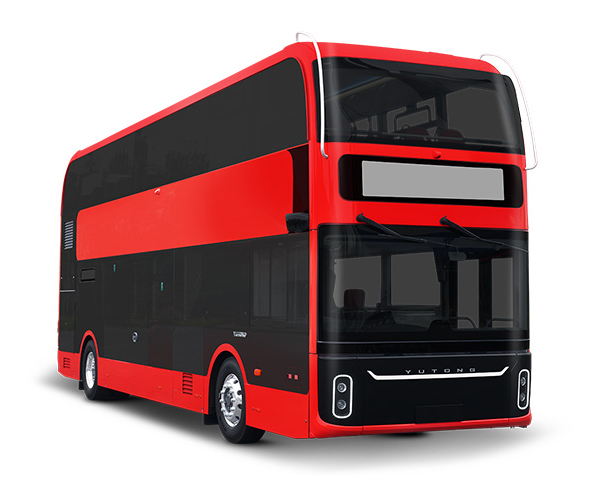
The Yutong U11DD is an electric double-decker model described as offering a range of more than 400 km under SORT 2 conditions. That figure provides a reference under a defined test cycle, but actual urban range can differ with traffic, climate control, operating speed, and passenger load. Fleet planners should use route-specific operating data before assigning the vehicle to a full-day schedule.
Charging arrangements also shape efficiency across the working day. Depot charging overnight may suit vehicles with predictable schedules, while opportunity charging can help on intensive routes if compatible infrastructure and sufficient dwell time are available. Charging plans should account for connection time, charger output, battery temperature, and the vehicle’s next departure rather than assuming every scheduled stop offers usable charging time.
Using Fleet Data to Improve Efficiency
Energy consumption becomes easier to manage when operators track it consistently. Useful measures include kilowatt-hours per kilometre, energy use per service shift, passenger numbers, ambient temperature, and the amount of time spent in congestion. Comparing similar routes and operating periods helps distinguish a genuine efficiency change from differences in service conditions.
Unexpected increases in consumption may indicate several possible causes. Tire pressure, wheel alignment, brake drag, battery thermal management, and climate-system performance can all affect energy use. Maintenance teams should investigate these factors before attributing every change to battery degradation or driving style.
Scheduling and dispatch decisions can also reduce avoidable energy demand. Where passenger demand permits, service planners can adjust vehicle allocation, avoid unnecessary deadheading, and allow practical charging windows between duties. Driver feedback adds context to telematics data, particularly when roadworks, diversions, or unusual congestion disrupt the planned route.
Conclusion
Full-day electric bus efficiency is shaped by a combination of vehicle technology, route conditions, passenger demand, and operational discipline. Regenerative braking can recover some energy, while careful climate control, preventive maintenance, and realistic charging schedules help keep consumption within planned limits.
Electric public transport options offered by Yutong Bus can be evaluated against each operator’s specific duty cycles; actual efficiency should be established through route data and representative operating trials. A reliable daily schedule emerges when energy forecasts reflect how the bus will really be used, not merely how it performs under standardized testing.