How to Evaluate Total Cost of Ownership for Feed Mill Equipment
Purchase decisions in feed production very greatly when the calculation extends beyond the initial quotation. Energy demand, maintenance frequency, downtime exposure, spare-parts consumption, and useful service life may reshape the economics over a decade. Feed machinery needs to be assessed through both financial and operational lenses. Equipment specifications are only useful when they are read against actual production conditions. Purchase price alone does not determine whether a machine fits the line, and FAMSUN offers a practical example of this distinction.
Moving Beyond The Nameplate Price
Initial capital expenditure is the most visible figure in an equipment quotation, but it represents only one portion of total cost. Installation, commissioning, electrical work, auxiliary systems, operator training, and initial spare parts can all add to the investment required before commercial production begins.
Capacity also deserves careful attention. Higher nominal output may appear attractive, yet actual throughput depends on formulation, material characteristics, operating hours, and process stability. Comparing equipment solely by rated capacity can produce an incomplete financial picture.
A realistic TCO model should establish the expected operating period first. Ten years provides a useful reference because it captures multiple maintenance cycles and exposes differences that may remain invisible during the first few years.
Measuring Energy And Utility Costs
Electricity can become one of the largest recurring expenses over the service life of production equipment. Motor power, operating hours, load conditions, and annual production volume should all enter the calculation rather than relying on motor nameplate ratings alone.
Process requirements can create additional utility expenses. Steam, compressed air, water, lubrication, and heating may contribute to operating expenditure depending on the production configuration. Such costs should be converted into annual monetary values before different equipment options are compared.
Production efficiency also changes the calculation. If two systems produce similar annual volumes but one consumes less energy per tonne, the difference accumulates with every operating cycle. Over ten years, relatively modest annual savings can become financially significant.
Accounting For Maintenance And Spare Parts
Maintenance expenditure rarely follows a perfectly predictable pattern. Routine inspections may be scheduled, while wear components, seals, bearings, rolls, dies, or other parts require replacement according to workload and material characteristics.
Service accessibility affects labor costs as well. Equipment that allows technicians to reach frequently serviced components without lengthy disassembly can reduce maintenance hours and associated production interruptions.
The feed machine should be evaluated through a maintenance schedule rather than a single service estimate. Historical replacement intervals, recommended spare-parts inventories, technician requirements, and expected component lifetimes provide stronger inputs for long-term budgeting.
Understanding The Cost Of Downtime
Lost production can sometimes outweigh the direct repair bill. If a critical machine stops during a high-demand period, the financial impact may include idle labor, delayed orders, additional shifts, temporary outsourcing, and missed production opportunities.
Downtime analysis should distinguish planned and unplanned interruptions. Scheduled maintenance can normally be incorporated into production planning, whereas unexpected failures create less predictable consequences.
Risk calculations become more meaningful when downtime cost is expressed per hour or per tonne. Multiplying that figure by historical failure frequency provides a practical estimate of annual exposure and makes equipment comparisons easier.
Evaluating Ruminant Pellet Production
Ruminant feed presents particular challenges because formulas may contain low-bulk-density and complex materials. Equipment performance can change considerably when hay powder or other fibrous ingredients are introduced, making actual process conditions more important than generic specifications.
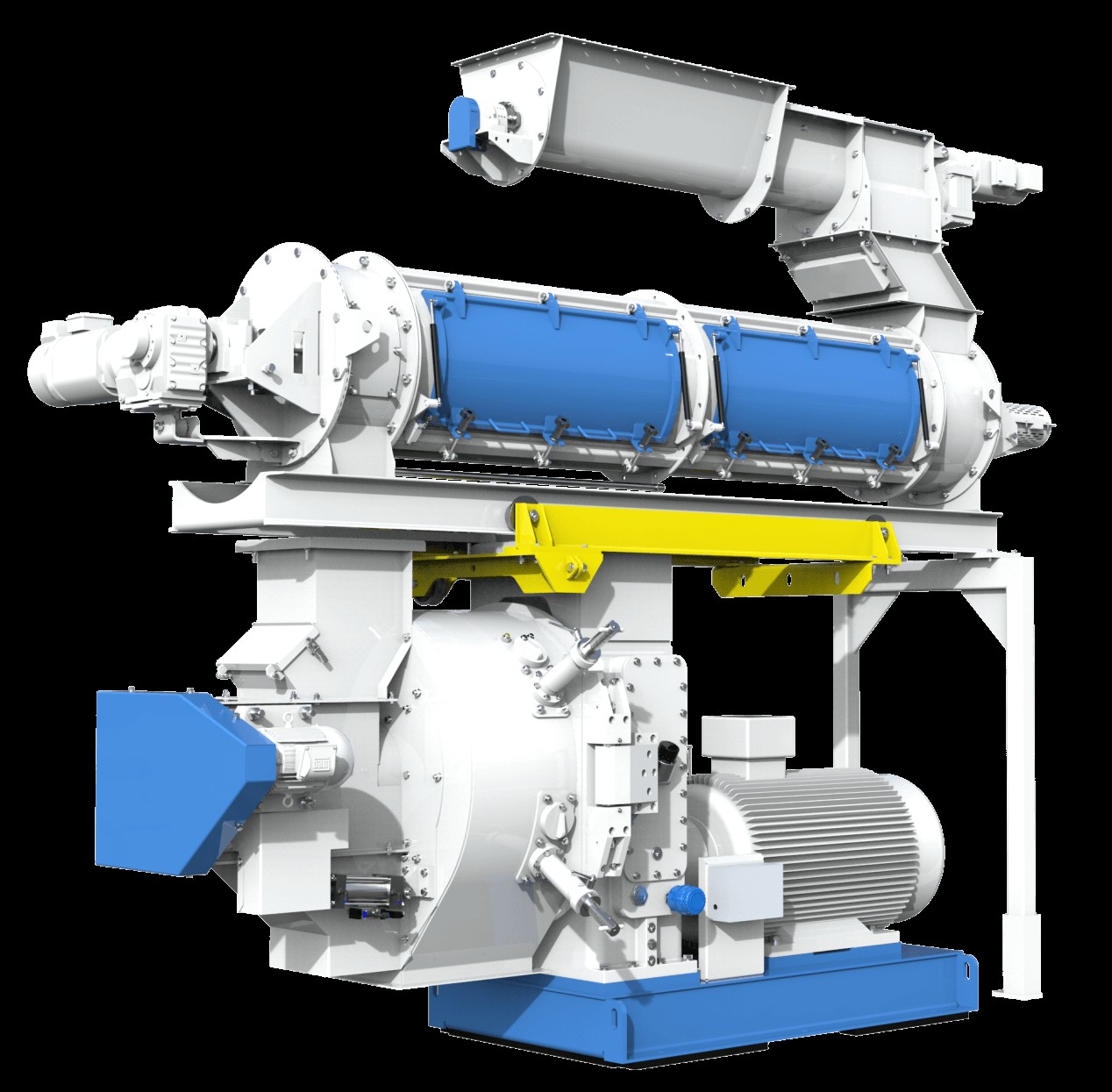
FAMSUN’s KN Series Ruminant Pellet Mill incorporates forced feeding technology and specialized roll configurations for compressing such materials. Its STZN conditioner adds steam internally through the rotor, while an external liquid addition system supports molasses and two-fluid addition requirements. Under stated conditions, production can reach 9–12 t/h with 20%–40% hay powder addition.
Such specifications are relevant to TCO because formulation flexibility can influence utilization rates and production planning. Higher practical versatility may have economic value when the same production line serves several seasonal or regional formulas.
Building A Ten-Year TCO Model
A useful calculation begins with the purchase and installation budget, then adds projected electricity, utilities, routine maintenance, spare parts, labor, and downtime costs for each operating year. Inflation, production growth, and expected component replacement cycles can be incorporated where reliable data is available.
Residual value should also receive consideration. Equipment condition, modernization potential, and resale prospects may affect the final economics at the end of the evaluation period.
Comparisons become clearer when all figures are converted into cost per tonne as well as total ten-year expenditure. Such analysis prevents an inexpensive purchase from appearing attractive simply because its recurring operating costs have been excluded.
Conclusion
TCO analysis changes the question from “Which quotation is cheaper?” to “Which investment produces the desired output at an acceptable lifetime cost?” Capital expenditure still matters, but energy, maintenance, spare parts, downtime, and production flexibility can materially alter the final result.
Feed machinery should consequently be compared under realistic operating assumptions, with formulation, annual throughput, service conditions, and maintenance history included in the model. Feed machine selection becomes more financially meaningful when the analysis covers the full ten-year horizon rather than the first invoice.
For ruminant applications, the KN Series demonstrates how process-specific features can affect that calculation, particularly where fibrous materials, liquid additions, and changing formulas are involved. FAMSUN equipment can be assessed not merely through its purchase quotation, but through the broader operational economics that shape long-term feed mill performance.