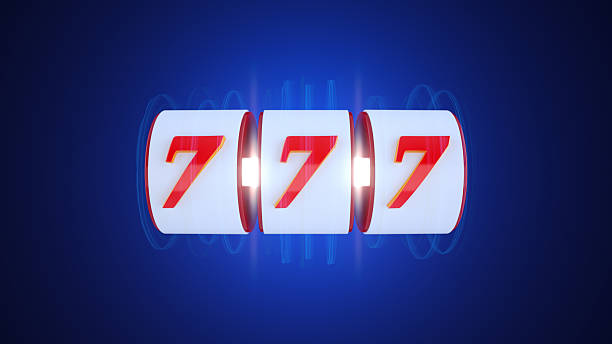
When Luck Looks Like Skill: Understanding the Illusions of Chance-Based Gaming
Have you ever played a chance-based game and felt that your timing, decisions, or previous results helped you predict what would happen next? Perhaps a winning combination appeared immediately after changing a bet, or a bonus feature activated following several unsuccessful attempts. Such experiences can make random outcomes feel connected to personal skill.
However, chance-based games operate differently from activities where practice and strategy directly influence results. Online slots, roulette, and similar games rely heavily on probability, even when their interfaces include interactive features and decision-making elements.
Understanding why luck sometimes appears to resemble skill can help players recognise misleading patterns, interpret results accurately, and make more informed decisions.
Why Random Outcomes Can Feel Predictable
The human brain naturally looks for patterns. This ability is useful in everyday activities, but it can also create misleading impressions when dealing with random events.
Imagine an online sbobet88 producing several unsuccessful spins before displaying a winning combination. A player might assume that the earlier losses somehow contributed to the eventual payout.
In a typical random number generator (RNG) based slot, however, previous spins do not determine the next result.
The apparent pattern may be nothing more than a sequence of independent random events.
1. The Illusion of Control in Chance-Based Games
The illusion of control occurs when people believe their actions influence outcomes that are largely determined by chance.
Digital games sometimes include interactive elements that make this impression stronger.
Players may select objects, press buttons, or choose when to begin an activity.
When Interaction Does Not Mean Control
Consider a slot bonus round featuring several closed treasure chests.
The player selects one chest and receives a displayed reward. This interaction may feel like a strategic decision.
However, depending on the game’s programming, the outcome may already be determined or governed by probabilities that the selection cannot improve.
The ability to interact with a screen does not automatically mean the player can influence the mathematical result.
2. Why Previous Losses Do Not Guarantee Future Wins
One common misunderstanding in chance-based gaming is the belief that an outcome becomes more likely simply because it has not occurred recently.
This is known as the gambler’s fallacy.
For example, someone might believe that a situs slot 5k is approaching a winning combination after ten unsuccessful spins.
Understanding Independent Events
In a properly functioning RNG-based slot with independent spins, each new result is generated according to the game’s established probabilities.
A sequence of losses does not create a debt that the game must repay.
Similarly, several consecutive wins do not guarantee that the next result will be unsuccessful.
Random sequences can naturally contain streaks, repetitions, and unexpected combinations.
3. How Near Misses Create Misleading Expectations
A near miss happens when a result appears close to a winning combination without meeting the necessary conditions.
For example, two matching symbols might appear alongside a third symbol that almost completes a qualifying combination.
Visually, this can create the impression that a win was narrowly missed.
Why Almost Winning Is Still Losing
In most slot games, a near miss does not mean the next spin has a greater probability of producing a win.
The displayed arrangement is simply another outcome under the game’s rules.
Animations and sound effects may make near misses particularly noticeable.
However, visual closeness should not be confused with mathematical closeness to a future payout.
4. How Winning Streaks Can Be Mistaken for Skill
Winning several times within a short period can create confidence in a particular approach.
A player might believe that changing stake sizes, selecting certain games, or spinning at particular moments produced the successful results.
However, a favourable sequence does not necessarily demonstrate an effective strategy.
Why Short-Term Results Can Be Misleading
Imagine two players using different betting patterns on the same type of slot.
One experiences several payouts, while the other receives fewer winning combinations.
These differences may arise from random variation rather than superior decision-making.
A short session provides limited evidence about a game’s long-term mathematical behaviour.
5. The Role of Animation and Sound in Perceived Success
Modern digital games use colourful graphics, animated characters, and sound effects to communicate gameplay events.
These elements can make outcomes feel more dramatic or meaningful.
A slot might display flashing symbols, celebratory music, or a large animated message after a payout.
Why Celebrations Do Not Always Mean Profit
Suppose a player wagers £2 and receives a payout of £1.
The game may still display an animation celebrating the winning combination.
However, the player has lost £1 on that spin.
This distinction matters because a visually celebrated payout is not necessarily a profitable outcome.
Players should focus on actual financial results rather than the intensity of the accompanying animation.
6. Understanding the Difference Between Skill and Knowledge
Although skill cannot reliably control random outcomes, knowledge can improve decision-making.
Players can learn how game rules operate, understand probability, and recognise misleading assumptions.
For online slots, useful information includes Return to Player (RTP), volatility, paylines, and bonus conditions.
What RTP Actually Means
RTP represents the theoretical percentage of wagered money returned through payouts over a very large number of plays.
A slot with a theoretical RTP of 96% has an expected long-run return of 96 units for every 100 units wagered under its mathematical model.
It does not guarantee that an individual player will recover 96% of their spending.
Understanding RTP helps explain the game’s mathematical structure, but it does not provide a method for predicting individual spins.
7. Why Betting Systems Cannot Remove Randomness
Some players use betting systems that involve increasing or decreasing stakes according to previous results.
These methods may create the impression of a structured strategy.
However, changing wager sizes does not alter the underlying probability of independent outcomes.
The Risk of Chasing Losses
A player who increases their stake after several losses may believe that a larger wager will help recover previous spending.
But the next result remains uncertain.
Increasing the stake simply increases the amount of money exposed to potential loss.
Financial limits are therefore more useful for controlling spending than attempting to predict when a winning sequence will begin.
8. How Game Design Can Influence Player Perception
Digital gaming interfaces influence how people interpret information.
Bright colours, progress indicators, animated rewards, and frequent feedback can make ordinary events appear more meaningful.
In chance-based games, these features may encourage players to notice particular outcomes while overlooking others.
For example, someone might recall a dramatic bonus payout more clearly than several smaller losses.
This selective attention can produce an inaccurate impression of overall results.
Clear balance information, transaction histories, and understandable game rules can help players evaluate their activity more accurately.
How to Recognise the Illusions of Chance-Based Gaming
Recognising misleading patterns begins with understanding that random events do not always appear random.
Streaks, repeated symbols, and unusual combinations can occur naturally.
Players should avoid interpreting these events as evidence that a game is becoming more likely to pay.
It is also important to distinguish decisions that influence spending from decisions that influence game outcomes.
Choosing a smaller stake may reduce financial exposure, but it does not provide control over the next result.
Taking breaks, setting limits, and avoiding attempts to recover losses can support more informed participation.
Conclusion
Chance-based gaming can create convincing illusions of skill through winning streaks, near misses, interactive features, and animated celebrations. These experiences may suggest that timing or personal decisions influence outcomes, even when results are determined by random mathematical systems. Understanding concepts such as the illusion of control, gambler’s fallacy, RTP, and independent events helps explain why apparent patterns are often unreliable. Knowledge can improve how players interpret games and manage spending, but it cannot eliminate randomness or guarantee winnings. Recognising the difference between luck and skill is essential for approaching chance-based entertainment with realistic expectations and responsible financial decisions.