Leveraging AI for Business Automation and Growth
The Strategic Value of AI Business Integration and Automation
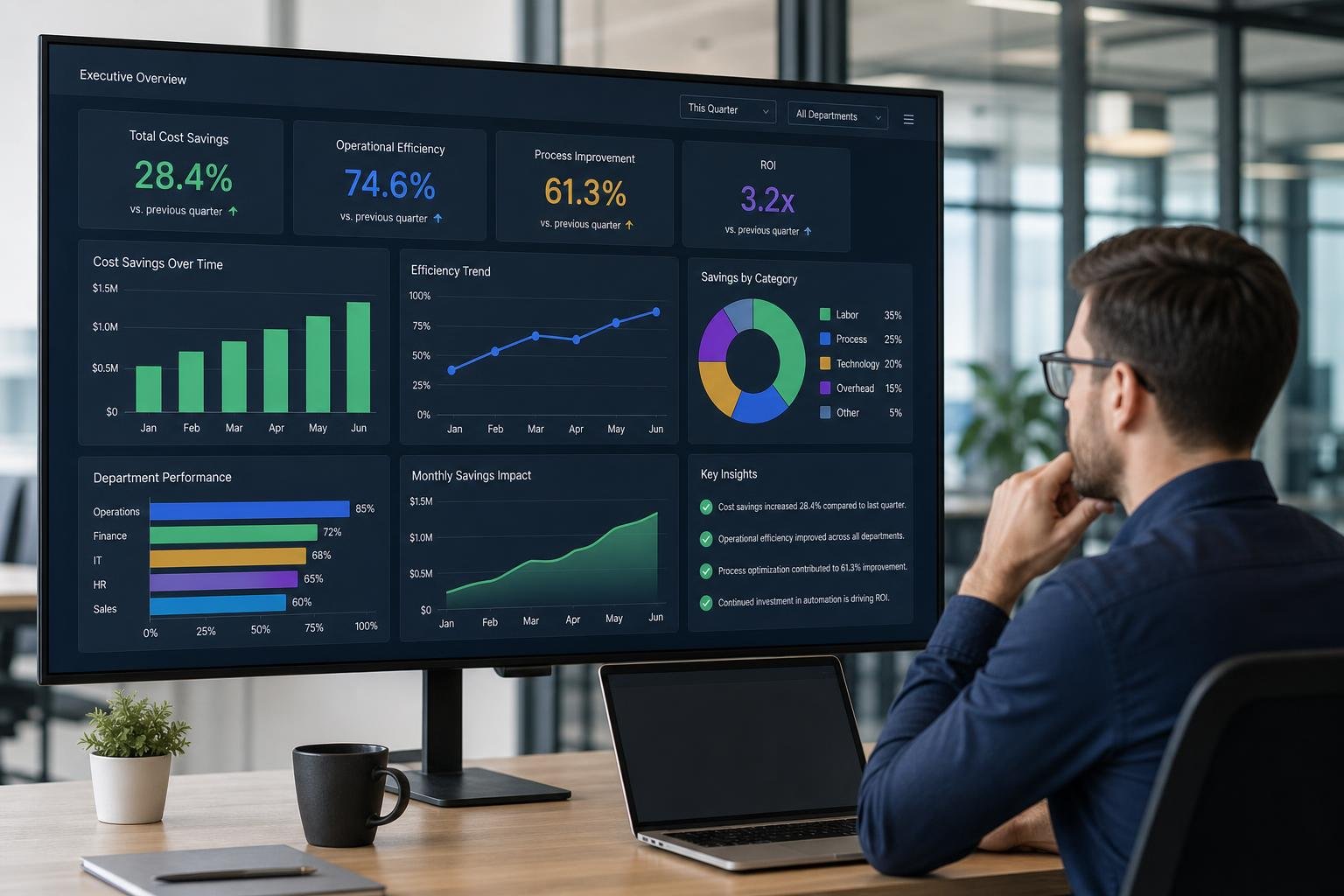
The shift from traditional business operations to an AI-powered enterprise is not merely an incremental upgrade; it represents a fundamental transformation. In 2026, we are witnessing the emergence of “digital labor” – intelligent systems and autonomous agents that augment human capabilities, manage complex cognitive workflows, and drive unprecedented business agility. This evolution extends beyond simple task automation, aiming for comprehensive enterprise-scale integration where AI acts as a central nervous system, coordinating processes and fostering innovation across the entire organization.
Defining AI Business Integration and Automation in 2026
At its core, AI business integration and automation refer to the strategic deployment of artificial intelligence technologies to streamline, optimize, and transform business processes. Unlike older forms of automation, AI-driven systems leverage advanced capabilities such as machine learning (ML), natural language processing (NLP), and predictive analytics. This allows them to process and understand vast amounts of unstructured data, recognize intricate patterns, and make adaptive decisions with minimal human intervention.
AI automation moves beyond predefined rules to embrace learning and adaptation. It involves programming computer systems to review diverse data sources, identify subtle trends, and make logical choices that continuously improve over time. This capability to learn from experience and adapt to changing conditions is what sets AI automation apart, enabling businesses to unlock new levels of efficiency, accuracy, and strategic insight.
RPA vs. Cognitive Automation
To fully appreciate the distinction, it’s crucial to differentiate between Robotic Process Automation (RPA) and what we now refer to as cognitive or intelligent automation.
RPA, often considered “traditional automation,” focuses on automating repetitive, rule-based tasks. It mimics human interactions with digital systems, following a fixed set of instructions to execute static workflows. Think of RPA as a digital assistant that can fill out forms, extract data from structured documents, or log into applications – tasks that are predictable and don’t require complex decision-making or learning. While highly effective for specific, high-volume tasks, RPA is limited by its inability to handle unstructured data, adapt to exceptions, or learn from new information.
Cognitive automation, powered by AI, transcends these limitations. It utilizes machine learning, natural language processing, and computer vision to handle unstructured data, understand context, and make dynamic, adaptive decisions. This allows for the automation of more complex, knowledge-intensive tasks that traditionally required human cognitive abilities. For instance, an AI system can analyze customer sentiment from emails, predict equipment failures, or dynamically route customer inquiries based on urgency and content. The integration of AI enables dynamic orchestration, where systems can intelligently coordinate multiple steps, even when faced with ambiguous or novel situations.
Here’s a simplified comparison:
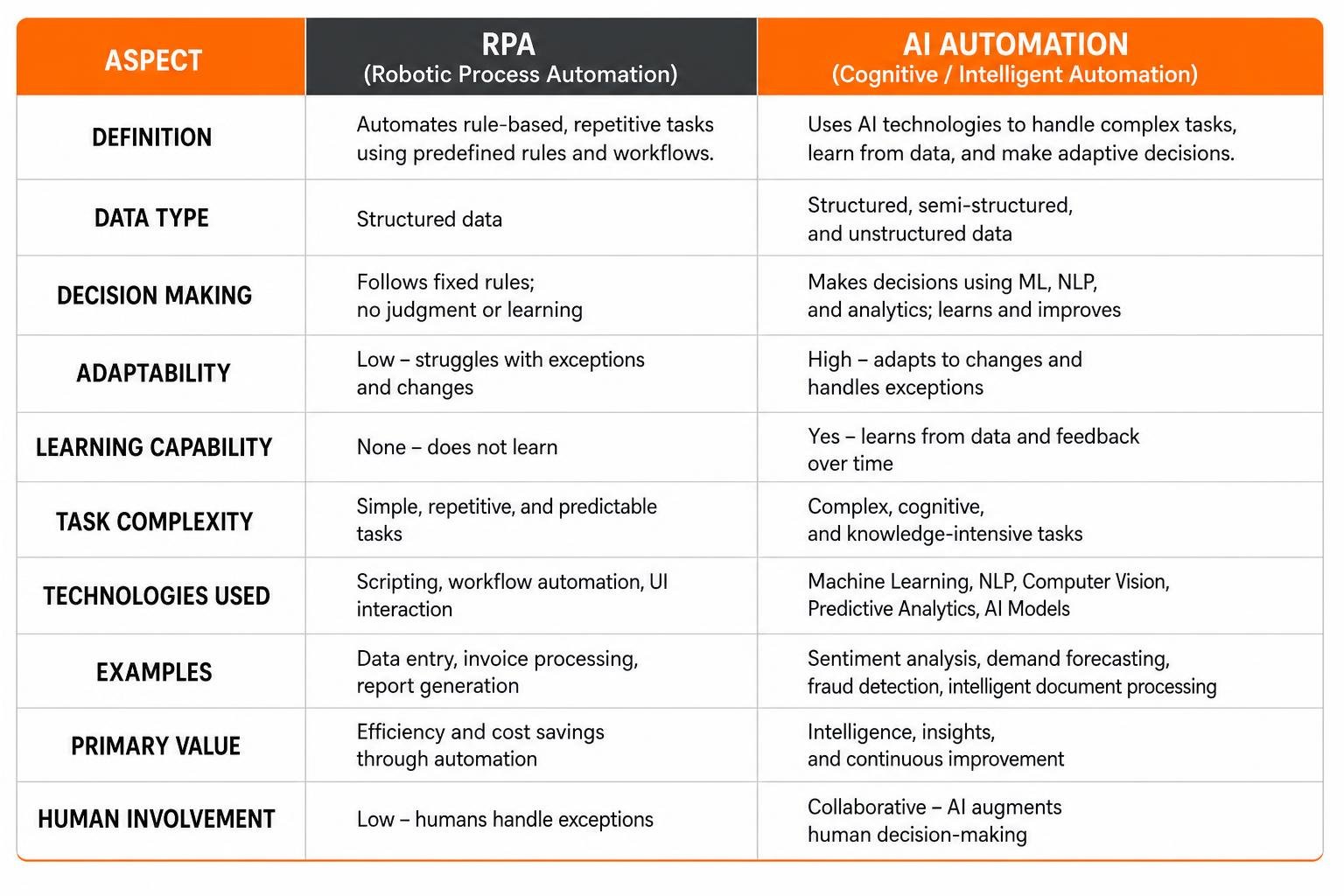
This table illustrates that while RPA excels at automating routine, predictable tasks, AI automation offers the flexibility and intelligence needed to tackle more complex, variable business challenges. When combined, they form a powerful intelligent automation strategy, where RPA handles the repetitive execution and AI provides the cognitive layer for analysis, decision-making, and continuous improvement.
Core Benefits and Real-World Impact of Intelligent Systems
The integration of AI into business processes is not just about technological advancement; it’s about delivering tangible, measurable benefits that impact the bottom line and transform operational capabilities. From boosting efficiency to enhancing strategic decision-making, intelligent systems are proving to be game-changers across industries.
Driving Efficiency and Cost Reduction
One of the most compelling arguments for AI automation is its ability to dramatically improve operational efficiency and reduce costs. Employees spend a significant portion of their workday on repetitive, low-impact tasks – an estimated 41% of their time, according to recent studies. By offloading these tasks to AI, businesses can free up valuable human capital.
The statistics speak for themselves:
- 90% of business leaders who use AI report cost and time savings.This pervasive benefit highlights AI’s universal applicability in optimizing operations.
- Customer support handle timeshave seen remarkable improvements. One online staffing platform decreased handle times by 20% with AI-generated replies, while service representatives at a telecommunications company improved response times for resolving customer issues by 67%.
- In healthcare, nurses at one company now spend 75% less time on manual charting, translating into substantial annual savings of $799,000.
- An insurance brokerage leveraged AI automation to save an estimated 44,000 hours and $6.9 million, showcasing the significant financial impact of intelligent process optimization.
These examples underscore how AI automation directly leads to operational cost reduction, allowing businesses to reallocate resources to more strategic initiatives. AI systems can operate 24/7 without fatigue, ensuring continuous process execution and minimizing overtime costs, further contributing to overall savings.
Enhancing Accuracy and Strategic Value
Beyond mere efficiency, AI significantly enhances accuracy and provides a foundation for more strategic business decisions. By minimizing human error in repetitive tasks, AI systems ensure higher quality outputs and greater reliability.
Consider these real-world impacts:
- An AI writing company increased conversion to its upgraded plans by 80% with AI-based lead scoring, demonstrating AI’s ability to drive revenue through precise targeting.
- A global information management services company saw a 70% decrease in chat abandonment ratesafter implementing generative AI, indicating improved customer experience and issue resolution.
- In industrial manufacturing, one of Europe’s largest companies launched an AI-based app and improved first-time fixes for hardware issues by 100%, drastically reducing downtime and maintenance costs.
These improvements in accuracy directly translate into better customer experiences, higher conversion rates, and more reliable operations. Moreover, by automating routine tasks, AI frees up human employees to engage in more creative, strategic, and higher-value work. In fact, 65% of desk workers believe generative AI will free up their time so they can be more strategic. This shift not only boosts employee satisfaction by eliminating tedious tasks but also allows organizations to leverage their human talent more effectively, fostering innovation and strategic growth.
Overcoming Implementation Challenges and Common Pitfalls
While the benefits of AI business integration are compelling, successful implementation is not without its hurdles. Organizations must proactively address challenges related to risk mitigation, change management, data privacy, and security compliance to fully realize AI’s potential.
Navigating Legacy Systems and Data Quality
One of the most significant challenges businesses face is integrating new AI systems with existing legacy infrastructure. Many enterprises operate with a complex web of disparate systems and data silos, making seamless API integration a daunting task. Without proper integration, AI automation remains siloed, unable to span the full lifecycle of a process or deliver end-to-end operational impact.
Furthermore, the effectiveness of any AI system is profoundly dependent on the quality of the data it processes. Unstructured data, such as invoices, emails, or customer feedback, must be cleaned, formatted, and organized into machine-readable formats before it can be used to train AI models. Poor data quality can lead to biased models, inaccurate predictions, and unreliable automation, effectively automating errors rather than efficiency.
Innovative solutions are emerging to tackle these integration complexities. The Model Context Protocol (MCP), for instance, is being hailed as a “USB-C for AI,” providing an open standard to simplify how AI models access data sources and tools securely. This aims to reduce the need for custom API development, making AI integration more plug-and-play. Additionally, API-driven and event-driven automation architectures are crucial for creating real-time, scalable integrations that can react instantly to system and user events, ensuring system compatibility and bi-directional data synchronization.
Avoiding the Pitfall of Automating Broken Processes
A common and costly pitfall in AI automation projects is the attempt to automate processes that are fundamentally flawed or inefficient to begin with. As the saying goes, “automating chaos creates faster chaos.” If a business process is broken, automating it will only amplify its inefficiencies, leading to multiplied errors and frustration rather than improvement.
Effective process reengineering is a prerequisite for successful AI automation. Businesses must critically analyze and optimize their existing workflows beforeintroducing AI. This involves identifying bottlenecks, eliminating unnecessary steps, and standardizing procedures. Only then can AI be effectively applied to streamline and enhance an already robust process.
Another critical consideration is the ongoing maintenance needs of AI systems. Unlike static software, AI models are not “set it and forget it.” They are subject to model drift, where their performance degrades over time as real-world data deviates from their training data. Furthermore, reliance on external APIs means that silent changes or deprecations can break previously perfect automations. Organizations must budget for continuous monitoring, retraining, and adaptation of their AI models, as well as proactive management of API dependencies, to prevent unexpected failures and ensure long-term reliability.
Building Internal Capabilities vs. External Sourcing
When embarking on an AI automation journey, organizations face a strategic decision: build internal capabilities or rely on external agencies and consultants. Both approaches have merits and drawbacks, and the optimal path often involves a hybrid strategy.
Relying solely on external “done-for-you” agencies for AI automation can lead to what is known as the “knowledge leak.” When consultants build custom automations and then depart, they take with them critical business logic and institutional knowledge. This leaves the client dependent on external expertise for future maintenance, modifications, or even understanding how their systems operate, effectively paying twice for the same learning curve if they switch providers. Moreover, the unpredictable nature of AI, where behavior can vary based on prompts, makes fixed-price, one-off projects challenging for both agencies and clients, often leading to budget overruns and unmet expectations.
A more sustainable model, particularly for long-term strategic growth, involves building internal AI automation capabilities. This approach fosters ownership, retains critical knowledge, and allows for continuous adaptation and innovation. It shifts the focus from one-off projects to ongoing consulting relationships, or even better, “done-with-you” education models where external experts train and empower internal teams.
A Roadmap for AI Business Integration and Automation
Successfully implementing AI automation requires a structured, strategic roadmap. This isn’t a one-size-fits-all solution but a journey that involves careful planning, execution, and continuous optimization.

Here’s a general roadmap for organizations:
- Identify Processes for Automation: Begin by pinpointing repetitive, high-volume, and time-consuming tasks that are good candidates for automation. Focus on processes that are well-defined and have clear objectives.
- Conduct a Comprehensive Assessment: Before diving into solutions, it’s crucial to understand your current state. This involves evaluating your existing infrastructure, data readiness, and organizational culture. A comprehensive AI audit and business assessmentcan help identify key opportunities, potential challenges, and prioritize initiatives based on strategic impact and feasibility. This foundational step ensures that AI efforts align with business goals and address real pain points.
- Choose the Right AI Tools and Platforms: Select technologies that align with your specific needs, considering factors like integration capabilities, scalability, ease of use, and vendor support. This might involve RPA tools, machine learning platforms, or specialized AI agents.
- Start with Small Pilot Projects: Instead of a big-bang approach, launch small, manageable pilot projects. This allows for testing the technology, gathering feedback, and demonstrating early ROI without significant risk.
- Train Employees: Invest in training programs to equip your workforce with the skills needed to work alongside AI. This includes understanding how AI systems function, how to interact with them, and how to leverage AI-generated insights.
- Measure and Optimize Performance: Continuously track key metrics such as time saved, error reduction, cost savings, and employee satisfaction. Use this data to refine your AI models, optimize processes, and scale successful initiatives across the organization.
Developing In-House Talent and Governance
Building internal AI automation capabilities requires investing in talent and establishing robust governance frameworks. Organizations need to cultivate specialized roles and foster a culture of ethical AI adoption.
Key roles needed to succeed in this growing field include:
- AI Business Analyst: Bridges the gap between business needs and AI capabilities, identifying automation opportunities and defining requirements.
- Automation Consultant: Provides expertise in process optimization and automation strategy.
- RPA Developer: Builds and maintains rule-based automation bots.
- AI Strategy Specialist: Guides the long-term vision for AI adoption.
- Data and Solutions Architect: Designs and implements the technical infrastructure for AI systems.
Beyond technical skills, ethical considerations and governance are paramount, especially in regulated industries. Organizations must embed principles of transparency, fairness, and privacy into their AI systems. This includes implementing robust policy enforcement points (PEP) and policy decision points (PDP) that govern AI actions, ensuring role-based access controls (RBAC), and maintaining detailed audit logs for compliance. For businesses seeking to develop highly specialized, secure, and scalable AI solutions tailored to their unique needs, partnering with experts who deliver custom production-ready AI solutions can be invaluable. This ensures that internal capabilities are augmented with cutting-edge development and adherence to industry best practices.
The goal is not to replace human workers but to augment them, allowing them to focus on creative, strategic, and high-value tasks while AI handles the routine. This human-in-the-loop approach is crucial for maintaining oversight, managing risks like algorithmic bias, and ensuring that AI serves human objectives.
Emerging Trends in Intelligent Automation
The landscape of AI business integration and automation is continuously evolving. As we look towards the future, several key trends are shaping how organizations will leverage intelligent systems for continuous optimization, competitive advantage, and future readiness. These emerging trends point towards more autonomous, interconnected, and personalized AI experiences.
Agentic AI and Multi-Agent Orchestration
One of the most transformative trends is the rise of agentic AI and multi-agent orchestration. Unlike earlier AI systems that performed isolated tasks, agentic AI refers to autonomous agents that can adapt, learn from experience, and make decisions without constant human supervision. These agents are designed to reason, plan, and execute complex workflows, often collaborating with other agents to achieve a larger objective.

Multi-agent orchestration takes this a step further by coordinating multiple specialized AI agents to work together seamlessly. Traditional workflow engines often rely on static, hand-coded Directed Acyclic Graphs (DAGs) that break when inputs vary. Agentic orchestrators, however, can dynamically assemble these DAGs at runtime, allowing for flexible and resilient automation. For example, an agent might handle customer inquiries, while another processes orders, and a third manages inventory, all coordinated by a central orchestrator. This dynamic collaboration is crucial for achieving Enterprise General Intelligence (EGI), a business-focused counterpart to Artificial General Intelligence (AGI), where AI systems can perform a wide range of cognitive tasks across an enterprise.
Governance in this multi-agent environment is critical. Policy Decision Points (PDP) and Policy Enforcement Points (PEP) are implemented before, during, and after every agent call to ensure compliance, security, and ethical behavior. This allows for granular control over autonomous actions, preventing unintended consequences and building trust in highly automated systems.
IoT Integration and Hyper-Personalization
The convergence of AI with the Internet of Things (IoT) is another powerful trend, leading to smarter, more responsive environments. IoT devices generate vast amounts of real-time telemetry data, which AI can analyze to provide predictive maintenance, optimize resource utilization, and enhance operational safety. For instance, AI-powered IoT sensors in manufacturing can monitor equipment health, predict potential failures, and automatically schedule maintenance, drastically improving first-time fixes and minimizing downtime.
Furthermore, AI-driven hyper-personalization is revolutionizing customer experience (CX). By analyzing real-time customer data from various touchpoints (including IoT devices, CRM systems, and interaction histories), AI can deliver highly tailored interactions and automated workflows. This ranges from personalized product recommendations and dynamic pricing to proactive customer support and customized marketing campaigns. The goal is to anticipate customer needs and provide bespoke solutions, creating a seamless and highly engaging experience that fosters loyalty and drives growth. This integration enables businesses to move beyond generic customer service to truly individualized engagement, where every interaction is optimized for the specific user.
Frequently Asked Questions about AI Automation
As businesses explore the potential of AI automation, several common questions arise regarding its nature, impact, and implementation. Addressing these queries can help clarify misconceptions and guide strategic planning.
What is the difference between traditional business process automation and AI-driven automation?
The fundamental difference lies in adaptability and intelligence. Traditional business process automation (BPA), often exemplified by Robotic Process Automation (RPA), is rule-based. It follows predefined, static rules to execute repetitive tasks, typically with structured data. If an exception occurs or the process changes, the automation breaks or requires manual intervention.
AI-driven automation, in contrast, leverages machine learning, natural language processing, and other AI technologies to learn from data, adapt to new situations, and make intelligent decisions. It can handle unstructured data, understand context, and continuously improve its performance over time. This adaptive learning capability allows AI automation to tackle more complex, variable, and cognitive tasks that traditional BPA cannot.
Does integrating AI automation replace human workers?
The prevailing consensus, supported by industry experts and real-world implementation, is that AI automation is designed to augment human work, not replace it entirely. While AI will automate many routine, low-value, and repetitive tasks, it frees human employees to focus on more creative, strategic, and higher-value activities that require critical thinking, emotional intelligence, and complex problem-solving.
This creates a “hybrid workforce” where humans and AI collaborate. AI handles the heavy lifting of data processing and routine execution, allowing humans to concentrate on innovation, customer relationships, and strategic decision-making. The concept of “human-in-the-loop” (HITL) is crucial here, ensuring that human oversight and intervention are built into AI processes, especially for critical decisions or unforeseen circumstances. This shift leads to increased employee satisfaction and allows organizations to leverage their human talent more effectively.
How can businesses ensure data security when integrating AI?
Ensuring data security and privacy is paramount when integrating AI, especially given the sensitive nature of business data and regulatory requirements. Businesses must adopt a multi-faceted approach:
- Robust Data Governance: Implement clear policies for data collection, storage, usage, and retention. This includes defining who has access to what data and how AI models are trained and deployed.
- Encryption: All data, both in transit and at rest, should be encrypted to protect against unauthorized access.
- Role-Based Access Controls (RBAC): Limit access to AI systems and the data they process based on an employee’s role and need-to-know basis. Secure API authentication is also critical for controlling access to integrated systems.
- Compliance Standards: Adhere to relevant data privacy regulations such as GDPR, CCPA, and HIPAA. AI systems should be designed with privacy-by-design principles.
- Audit Trails: Maintain comprehensive audit logs of all AI activities, decisions, and data access. This provides transparency, accountability, and the ability to trace actions for compliance purposes.
- Human Oversight: Implement human-in-the-loop mechanisms where human review and approval are required for critical AI-generated actions, especially those involving sensitive data or financial transactions.
- Ethical AI Practices: Proactively address potential issues like algorithmic bias and ensure fairness, transparency, and accountability in AI decision-making.
By implementing these measures, businesses can build trust in their AI systems and mitigate the risks associated with data breaches and privacy violations.
Conclusion
The journey towards AI business integration and automation is not merely an option but a strategic imperative for organizations aiming to thrive in the competitive landscape of 2026 and beyond. We have seen how AI fundamentally differs from traditional automation, offering adaptive intelligence, the ability to process unstructured data, and dynamic decision-making capabilities.
The core benefits are undeniable: from significant operational cost reductions and enhanced efficiency, freeing employees from repetitive tasks, to vastly improved accuracy that drives strategic value and boosts customer satisfaction. While challenges like integrating with legacy systems, ensuring data quality, and avoiding the pitfall of automating broken processes require careful navigation, a structured roadmap and proactive risk mitigation strategies can pave the way for success.
Building internal capabilities, supported by strategic external partnerships for specialized solutions, is crucial for long-term sustainability and knowledge retention. Moreover, emerging trends such as agentic AI, multi-agent orchestration, and the integration of IoT for hyper-personalization are redefining the boundaries of what’s possible, promising even greater levels of autonomy and tailored experiences.
The strategic summary is clear: embracing AI automation is about fostering continuous improvement, securing a competitive advantage, and ensuring future readiness. By thoughtfully integrating AI into core business processes, organizations can unlock unprecedented growth, empower their workforce, and navigate the complexities of the modern economy with agility and intelligence.