Can You Cancel Car Insurance Add-Ons?
Key Takeaways
- Car insurance add-ons can be canceled, but the process and potential fees vary by provider.
- Review your policy terms to understand cancellation procedures and any associated costs.
- Consider the impact on your overall coverage before removing any add-ons.
Table of Contents
- Understanding Car Insurance Add-Ons
- Reasons for Canceling Add-Ons
- How to Cancel Car Insurance Add-Ons
- Potential Fees and Refunds
- Impact on Overall Coverage
- Alternatives to Canceling Add-Ons
- Frequently Asked Questions
Car insurance add-ons are designed to enhance the protection and peace of mind your policy offers. However, not all add-ons are necessary for every driver, and your needs may shift over time. If you’re paying for coverage that no longer serves you, learning about how to cancel GAP insurance and other extras can empower you to adjust your policy and optimize your insurance expenses without sacrificing essential protection.
It’s important to know that canceling an extra or optional coverage is not only possible but sometimes financially wise, especially if your circumstances or the value of maintaining an add-on coverage change. Whether you’re experiencing budget constraints, lifestyle shifts, or discovering redundancy in your coverage, understanding your cancellation options puts you in control of your car insurance.
Each insurer may approach cancellations differently. You must review your insurance terms or speak directly with your provider to understand the process and any possible fees or policy changes that could result from dropping an add-on.
Before making any changes to your existing coverage, consider both your short-term needs and long-term requirements. Thinking through all the implications can save you unexpected gaps in coverage or unnecessary expenses in the future.
Understanding Car Insurance Add-Ons
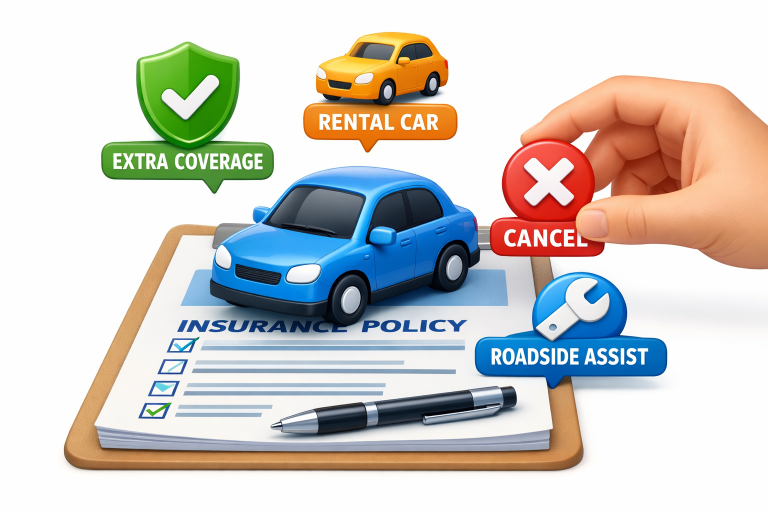
Car insurance add-ons are extra forms of coverage you can purchase to supplement your standard policy. This approach allows you to tailor your insurance to better fit your specific risk profile and lifestyle. Common examples of add-ons include roadside assistance, rental car reimbursement, gap insurance, and comprehensive coverage. While these can help fill gaps left by more basic policies, the decision to keep or remove them depends largely on your situation and preferences.
Add-ons are popular because they can cover out-of-pocket costs that would otherwise fall on you after an accident or unexpected incident. However, every additional feature you include in your policy will usually raise your overall premium, so it’s wise to periodically assess their value.
Reasons for Canceling Add-Ons
Everyone’s insurance needs evolve over time. You might decide to cancel certain add-ons for a variety of reasons, such as:
- Financial Constraints: Cutting unnecessary features is a straightforward way to reduce monthly or annual premiums without compromising on core coverage.
- Life Changes: If you drive less due to remote work or no longer depend on rental cars, some add-ons could become redundant.
- Duplicate Protection: Many credit cards or roadside services provide coverage or perks identical to some insurance add-ons, which makes paying for overlapping features unnecessary.
How to Cancel Car Insurance Add-Ons
Canceling an add-on generally involves a straightforward process, but you should always confirm the specifics with your provider. Here’s a typical approach:
- Review Your Policy: Carefully read the terms and conditions associated with your policy and the add-on itself. Look for stipulations regarding cancellation timing or fees, since some features may only be dropped during renewal or before a specific cutoff date.
- Contact Your Insurer: Get in touch with your insurance representative or call customer service. They can explain any consequences and finalize the process for you.
- Request Documentation: Always secure written or emailed confirmation of your cancellation. This is important for your records and protects you if any billing or coverage discrepancies arise later.
Insurers may have unique policies on add-on cancellations. Sometimes, an in-person visit, a specific form, or completing digital consent is necessary. If you’re unsure, a quick call can clarify the required steps.
Potential Fees and Refunds
Some insurers include administrative cancellation fees, which might be a flat rate or a small percentage of your remaining policy balance. The fee structure should be listed in your policy documents or the provider’s terms of service.
If you pre-paid for an annual add-on but cancel halfway through the year, many insurers offer prorated refunds for the unused months. This is especially important for costlier add-ons like gap insurance or rental coverage. For more details and general industry practices on fees and refunds, you can consult articles from consumer protection authorities, such as Consumer Reports.
Impact on Overall Coverage
Dropping an add-on sometimes creates coverage gaps that leave you financially or legally exposed. For instance, if you remove gap insurance while still leasing or financing your vehicle, you might not meet your lender’s insurance requirements, which could have serious consequences.
Some drivers mistakenly believe their policy will automatically adjust to their benefit. In reality, lowering coverage levels or removing certain features could result in fewer protections and higher out-of-pocket expenses in the event of a claim. Always assess your risks and ensure you meet local minimum insurance laws before making cuts.
Alternatives to Canceling Add-Ons
If your goal is to lower your premium or make your policy more efficient, consider alternatives instead of cancellation. Adjusting the coverage levels (for example, increasing your deductible on comprehensive or collision) can lower costs while maintaining essential coverage.
It might also be worthwhile to shop around for new quotes. Different insurance companies have varying rates and discounts on add-ons, and changing providers could yield significant savings. For further tips on optimizing insurance costs, resources such as Forbes Advisor can be helpful.
Frequently Asked Questions
Can I cancel an add-on at any time?
Most insurers allow the cancellation of add-ons at any point during your policy, but check for timing restrictions or possible penalties, especially close to your renewal window.
Will canceling an add-on affect my premium?
In many cases, your premium will decrease after canceling an add-on, but always confirm with your insurer because some bundled discounts or multi-feature savings could be affected.
Is there a cooling-off period for add-ons?
Many insurers offer a cooling-off period, usually around 14 days, where cancellations can be made without penalty. Review your policy details for specific terms, as this period may differ.
By understanding your policy and options, you can confidently make changes that reflect your current lifestyle and financial goals while ensuring you maintain the protection you truly need.