Understanding Casino Math: What House Edge Really Means for Your Wallet
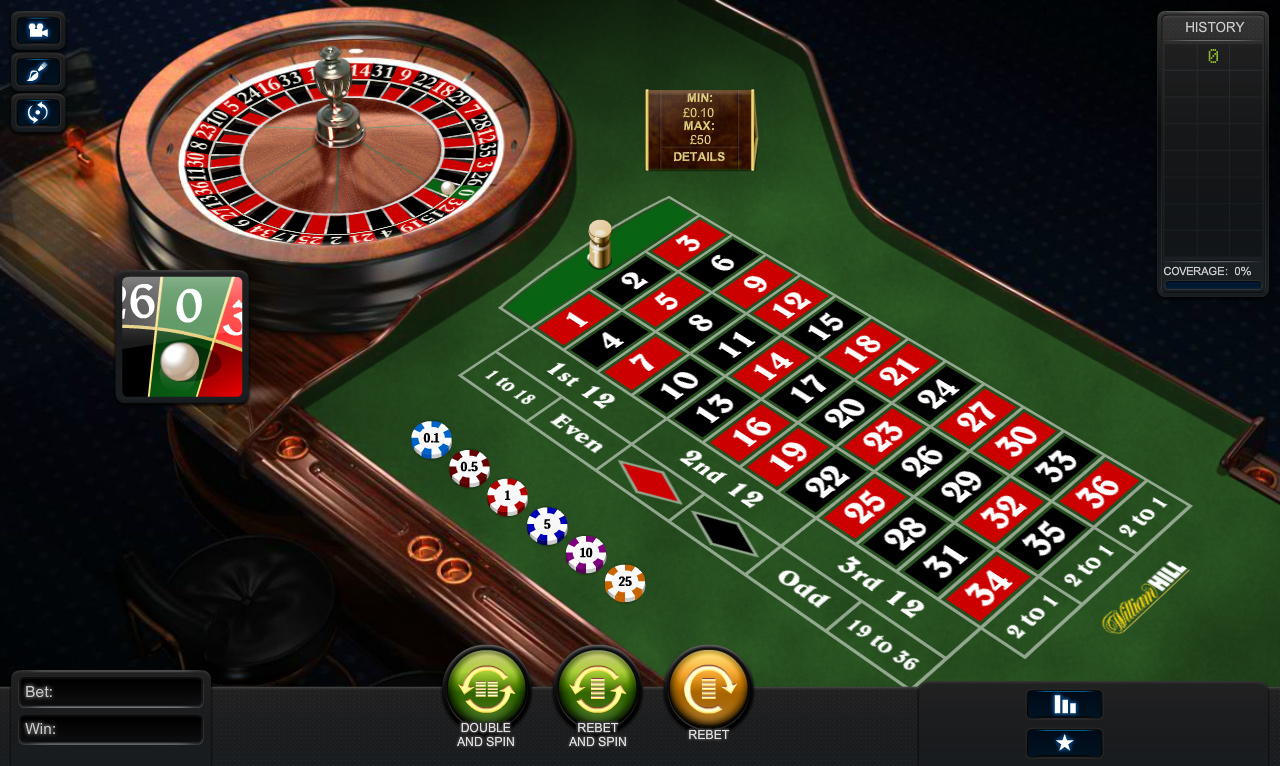
Walk into any casino — physical or digital — and you will encounter a carefully engineered environment designed to obscure a simple mathematical truth: the house always wins in the long run. Not because the games are rigged, not because the dealers are cheating, and not because you personally have bad luck. The house wins because every game is built on a mathematical framework that guarantees a small percentage of every dollar wagered flows to the casino.
This framework is not a secret. It is not hidden in fine print. It is a mathematical certainty that every casino operator understands intimately and most players understand barely at all. Bridging that gap — understanding what house edge actually means for your wallet in concrete, dollar-level terms — is arguably the most valuable thing any casino player can do.
House Edge: The Price of Admission
House edge is the most important number in casino gambling, yet most players have never looked it up for their favorite game. It represents the percentage of each wager that the casino expects to retain over the long run. Think of it as the cost of entertainment — the price you pay for the thrill of the game, the atmosphere of the floor, and the possibility (however slim) of a life-changing win.
How House Edge Is Calculated
Every casino game has defined rules and probabilities. The house edge emerges from the gap between the true odds of an event and the payout offered by the casino.
Take the simplest possible example: a coin flip. True odds are 50/50. If a casino offered even money on a fair coin flip, the house edge would be zero — neither side has an advantage. But no casino would offer that bet. Instead, they might pay 95 cents on a $1 bet when you win and keep your full $1 when you lose. Your expected value on each bet: (0.50 x $0.95) – (0.50 x $1.00) = -$0.025. The house edge is 2.5%.
Real casino games use the same principle but hide the mechanism behind more complex rules. In blackjack, the house edge comes primarily from the fact that the player acts first — if both the player and dealer bust on the same hand, the player still loses. In roulette, the edge comes from the green zero (or zeros) that pay nothing on most bet types. In slots, the edge is programmed directly into the software.
The House Edge Spectrum
Not all games are created equal. The difference in house edge across casino games is dramatic:
Low-edge games (under 2%):
- Blackjack with basic strategy: 0.5% (single deck) to 1.5% (8 deck, bad rules)
- Baccarat, banker bet: 1.06%
- Craps, pass/don’t pass: 1.36% / 1.41%
- French roulette with La Partage: 1.35%
Medium-edge games (2% to 5%):
- European roulette: 2.70%
- Three Card Poker, ante-play: 3.37%
- Pai Gow Poker: 2.5% (approximate, strategy-dependent)
- Caribbean Stud: 5.22%
High-edge games (over 5%):
- American roulette: 5.26%
- Slot machines: 2% to 15% (varies by machine and jurisdiction)
- Big Six Wheel: 11% to 24% (depending on the bet)
- Keno: 20% to 40%
The range is enormous. A player at a single-deck blackjack table with proper strategy pays 50 cents per $100 wagered. A keno player might pay $25 per $100 — fifty times more. Both players are in the same casino, spending the same amount of time, but one is paying fifty times the price.
RTP: House Edge’s Mirror Image
Return to Player (RTP) is simply 100% minus the house edge. A game with a 2% house edge has a 98% RTP. The terminology is common in slot machines and online casinos, where regulators require RTP disclosure.
Why 95% RTP Still Loses You Money
A 95% RTP sounds generous — you get back 95 cents of every dollar you put in. But this misunderstands how casino play works in practice.
A typical slot player does not bet $100 and walk away. They bet $100, get $95 back, bet $95, get $90.25 back, bet $90.25, and so on. Each cycle through the machine grinds off another 5%. This is called the “churn” or “re-bet” effect, and it means the actual cost of a session is much higher than the per-bet house edge suggests.
Consider a player who starts with $200 and bets $2 per spin at a 95% RTP slot, spinning once every five seconds. In one hour, they will make 720 spins, wagering a total of $1,440. The expected loss is 5% of $1,440 = $72. They started with $200 and expect to have $128 after one hour — a 36% loss of their original bankroll, despite playing a game with a seemingly generous 95% RTP.
This arithmetic surprises most players because they conflate RTP (a per-bet metric) with how much of their original money they will take home (a per-session metric). The gap between the two is a function of playing speed and session length.
Speed Kills (Your Bankroll)
The speed of play is one of the most underappreciated factors in casino economics. A blackjack player at a full table sees perhaps 60 hands per hour. A slot player might see 700 spins per hour. Even though the slot might have a lower house edge per bet, the volume of bets per hour can make it far more expensive overall.
Here is a comparison for a $5 bettor:
| Game | House Edge | Bets/Hour | Total Wagered/Hour | Expected Loss/Hour |
|---|---|---|---|---|
| Blackjack (full table) | 0.5% | 60 | $300 | $1.50 |
| Craps (pass line) | 1.41% | 50 | $250 | $3.53 |
| European roulette | 2.70% | 35 | $175 | $4.73 |
| American roulette | 5.26% | 35 | $175 | $9.21 |
| Video poker (9/6 JoB) | 0.46% | 400 | $2,000 | $9.20 |
| Slots (95% RTP) | 5.0% | 600 | $3,000 | $150.00 |
The blackjack player loses $1.50 per hour. The slot player loses $150.00 per hour. The slot player is paying one hundred times more for their entertainment — not because slots are a “bad” game, but because the combination of a higher house edge and dramatically faster play creates a much more expensive experience.
Variance: The Engine of Casino Drama
If house edge were the only factor, gambling would be boring. You would sit down, lose steadily, and leave poorer. There would be no excitement, no jackpots, and no stories about the night you turned $50 into $5,000.
Variance is what makes gambling psychologically compelling — and mathematically dangerous.
Understanding Variance
Variance measures how widely results scatter around the expected value. A low-variance game produces results that are close to the mathematical expectation most of the time. A high-variance game produces extreme results — big wins and big losses — that can deviate wildly from the expected value in the short run.
Blackjack is a relatively low-variance game. Most hands resolve within a few dollars of the average, and multi-hundred-dollar swings are uncommon for small stakes players. You rarely walk away from a blackjack session having won ten times your buy-in.
Slot machines, by contrast, are designed for maximum variance. A machine might pay out nothing for hundreds of spins, then deliver a jackpot worth thousands of times the bet size. The expected value is still negative — the house edge ensures that — but the distribution of outcomes is dramatically skewed.
The Psychological Trap
High variance creates cognitive distortions that work in the casino’s favor. A player who hits a $2,000 jackpot on a $1 slot machine experiences a powerful emotional reward. The human brain — which evolved to detect patterns and attribute causation — interprets this as evidence that the machine is “loose” or that the player is “lucky” or “due for another win.”
In reality, the jackpot was simply a high-variance event that will be offset by thousands of losing spins. The machine is not loose. The player is not lucky. The math has not changed. But the emotional impact of the big win can sustain hours of additional play at a game that costs $150 per hour — a far more effective sales pitch than any advertisement.
Standard Deviation and Session Outcomes
For the mathematically inclined, variance can be quantified using standard deviation. In a session of n bets at even money, the standard deviation is approximately sqrt(n) times the bet size. For 400 even-money $5 bets, the standard deviation is sqrt(400) x $5 = $100.
This means that roughly 68% of sessions will produce results within $100 of the expected value, and 95% of sessions will fall within $200. If your expected loss is $10 (from a 0.5% edge on $2,000 total wagered), the range of likely outcomes stretches from -$210 to +$190. You might win $190 or lose $210, despite having an expected loss of only $10.
This is why players should never evaluate a game based on a single session. One night at the casino tells you almost nothing about the true cost of the game you are playing. Only long-run tracking reveals the mathematical reality.
Expected Loss: The Number Your Casino Does Not Want You to Calculate
Your expected loss is the most practical application of house edge. It converts an abstract percentage into a dollar figure that hits home.
Expected Loss = Average Bet x Bets Per Hour x Hours Played x House Edge
This formula answers the question that every casino player should ask before sitting down: “How much will this evening of entertainment actually cost me?”
Case Studies
The Blackjack Weekend: A couple visits a casino for two evenings, playing $25 blackjack for four hours each night. At 70 hands per hour with a 0.5% house edge: $25 x 70 x 8 x 0.005 = $70. Their expected cost for the weekend is $70 — less than dinner for two at many casino restaurants.
The Slot Marathon: A solo player spends eight hours over a weekend playing $1 slots at 600 spins per hour with a 7% house edge: $1 x 600 x 8 x 0.07 = $336. Their expected cost is nearly five times the blackjack couple’s, despite betting one-twenty-fifth the amount per wager.
The Roulette Tourist: A tourist plays American roulette for two hours at $10 per spin, 35 spins per hour: $10 x 35 x 2 x 0.0526 = $36.82. Modest enough — but if they switch to European roulette at the same stakes, the expected cost drops to $18.90. Same game, same bets, same time — but a different wheel saves nearly $18.
These calculations are simple arithmetic, yet most casino visitors have never performed them. Running the numbers before a casino visit is one of the most effective things players can do to set realistic expectations, and there are casino math tools available online that perform these calculations instantly. ToolsGambling.com, for instance, offers specialized calculators for expected loss, wagering requirements, odds conversion, and game-specific probability analysis — all free and accessible from a phone or tablet at the casino itself.
Wagering Requirements: The Hidden Math in Casino Bonuses
Online casinos routinely offer bonuses to attract and retain players: deposit matches, free spins, and cashback offers. These bonuses almost always come with wagering requirements — conditions specifying how much you must bet before withdrawing any bonus-linked funds.
Decoding the Fine Print
A typical offer: “100% match bonus up to $500 with 35x wagering requirement.” This means the casino will match your deposit dollar-for-dollar up to $500. If you deposit $500, you receive $500 in bonus funds. But before you can withdraw any winnings from those bonus funds, you must place $500 x 35 = $17,500 in total bets.
At a 2% house edge, the expected cost of those $17,500 in bets is $350. Your $500 bonus is worth only $150 in expected value — before accounting for game restrictions (many bonuses prohibit low-edge games like blackjack from counting toward the requirement) and maximum bet limits.
When Bonuses Are Worth Claiming
A bonus is worth claiming when its face value exceeds the expected cost of clearing the wagering requirement. The formula:
Bonus Value = Bonus Amount – (Wagering Requirement x House Edge of Allowed Games)
If the result is positive, the bonus has positive expected value. If negative, you are better off declining it. A wagering requirement calculator performs this analysis in seconds, potentially saving hundreds of dollars per year for regular online casino players.
The Responsible Gambling Imperative
Understanding casino math is not just about saving money — it is a pillar of responsible gambling. Problem gambling thrives on misinformation, cognitive distortions, and unrealistic expectations. Mathematical literacy counteracts all three.
Cognitive Distortions That Math Corrects
The Gambler’s Fallacy: The belief that past results influence future outcomes. “Red has come up seven times in a row — black is due.” In reality, each roulette spin is independent. The probability of black on the next spin is exactly the same as it was before the streak: 18/37 on a European wheel, regardless of what happened on the previous seven spins.
The Hot Hand Fallacy: The belief that a winning streak indicates a skill or pattern that will continue. In games of pure chance, there is no such thing as a hot hand. A player who has won five consecutive blackjack hands has the same probability of winning the sixth as they did the first.
The Illusion of Control: The belief that player actions influence outcomes in games of pure chance. Blowing on dice, choosing “lucky” slot machines, or picking lottery numbers based on birthdays have zero effect on mathematical probabilities.
Loss Chasing: The belief that increasing bets after losses will recoup those losses. This is the foundation of the Martingale system, which doubles bets after each loss. Mathematically, the Martingale system does not change the expected value — it simply trades many small wins for occasional catastrophic losses that destroy bankrolls.
Setting Informed Limits
A player who calculates their expected loss before playing can set a budget grounded in mathematical reality rather than arbitrary guesswork. If the calculator shows an expected loss of $60 for a planned session, the player can decide in advance whether $60 is an acceptable entertainment expense. They can also set a loss limit that accounts for variance — perhaps $150, which is roughly $60 plus one standard deviation — and commit to stopping when that limit is reached.
This approach transforms gambling from an open-ended financial risk into a controlled entertainment expense, similar to budgeting for a concert ticket or a round of golf.
Game Selection as Financial Strategy
The single most impactful decision a casino player makes is game selection. Not which seat to choose, not which numbers to pick, not whether to play at peak or off-peak hours — but which game to play.
The Cocktail Napkin Test
Before sitting down at any game, perform a quick mental calculation:
- What is the house edge? (If you do not know, look it up before playing.)
- How many bets will I make per hour?
- How long do I plan to play?
- What is my average bet?
Multiply those four numbers together. If the result is higher than you are willing to pay for entertainment, choose a different game, lower your bet size, or play for less time.
Optimal Game Selection by Budget
Budget under $100: Full-pay video poker (Jacks or Better 9/6, house edge 0.46%) or low-stakes blackjack. Both offer low house edges and moderate pace, stretching your bankroll.
Budget $100-$500: Blackjack with basic strategy remains the best value. Craps pass-line bets are another strong option with a social atmosphere.
Budget over $500: At higher budgets, the choice depends on preference. Baccarat offers a low house edge with minimal decision-making. Blackjack rewards skill with one of the lowest edges in the casino.
For entertainment value: Roulette (European, never American) offers a theatrical experience at a moderate cost. The pace is slow, the bets are easy to understand, and the social atmosphere adds value.
The Games to Avoid
Mathematically, certain casino products are dramatically overpriced. The Big Six Wheel, with edges ranging from 11% to 24%, is among the worst bets on any casino floor. Casino War, with its 2.88% edge, is tolerable but offers no strategic depth. Exotic side bets on table games — the Dragon Bonus in baccarat, the Lucky Ladies in blackjack — typically carry edges of 7% to 25%, dwarfing the edge on the main game.
These products exist because they are profitable for the casino, not because they are enjoyable for informed players. A player who understands the math would never touch a side bet with a 15% house edge when the main game offers a 0.5% edge.
Conclusion
Casino math is not complicated. House edge, RTP, variance, and expected loss are concepts that any adult can understand in an afternoon. They do not require a statistics degree. They do not require a calculator (though one helps). They require only the willingness to look at numbers honestly and make decisions based on reality rather than hope.
The casino is a business. Its product is entertainment, and its pricing — the house edge — is embedded in every game on the floor. There is nothing wrong with paying that price, just as there is nothing wrong with paying for a movie ticket or a theme park admission. But a consumer who does not know the price is a consumer who cannot make an informed purchase.
Know the edge. Calculate the cost. Set a budget. Play within it. That is not a gambling strategy — it is basic financial literacy applied to a specific form of entertainment. And it is the single most effective thing any casino player can do to ensure that a night of fun does not become a morning of regret.