Maximizing Local Visibility for Small Businesses in the Digital Age
The Fundamentals of Local SEO and Google Maps Marketing
In today’s digital landscape, the distinction between traditional SEO and local SEO is more pronounced than ever. While traditional SEO aims for broad, national, or even global visibility, local SEO zeroes in on a specific geographic area, connecting businesses with customers in their immediate vicinity. At the heart of this local strategy lies Google Maps marketing, a powerful approach that optimizes your presence in Google’s local search ecosystem.
The Map Pack, often referred to as the 3-Pack, is the coveted section that appears at the top of Google’s search results for local queries, displaying three business listings directly on a map. Securing a spot in this pack is paramount, as studies show that nearly 40-50% of local searches click on these top three results. This dominance highlights why businesses must prioritize their Google Business Profile (GBP) and local SEO efforts.
Achieving this level of visibility can be complex, requiring meticulous attention to detail and consistent effort. For many businesses, especially those juggling multiple responsibilities, managing these intricacies can be overwhelming. This is where advanced solutions, such as automated AI local SEO, can provide a significant advantage, streamlining optimization tasks and ensuring your business stays competitive without demanding constant manual oversight. These tools help businesses maintain accurate, up-to-date profiles, which are crucial for ranking well in local search.
Distinguishing Local Search from Traditional SEO
The core difference between traditional SEO and Google Maps marketing lies in their objectives and the signals they prioritize. Traditional SEO primarily focuses on organic search results, driving traffic to your website through relevant keywords, high-quality content, and strong backlinks. It’s often a discovery-based search, where users might be researching a topic or product without immediate purchase intent.
Google Maps marketing, on the other hand, is inherently transactional and location-driven. When someone searches for “dentist near me” or “best pizza in [city],” they typically have a clear, immediate need. Google’s algorithm prioritizes businesses that can fulfill this need geographically. In this context, your Google Business Profile becomes your primary digital storefront, appearing before the traditional “blue links” of organic website results, especially on mobile devices. This mobile-first indexing for local searches means that users are often presented with conversion-ready leads, allowing them to call, get directions, or visit your website directly from the search results.
Here’s a simplified comparison:
Feature Organic SEO (Traditional) Google Maps Marketing (Local) Primary Goal Website traffic, brand awareness, information Local leads, foot traffic, direct conversions Key Ranking Factors Backlinks, content quality, keywords, site speed, technical SEO Proximity, relevance, prominence (GBP optimization, reviews, citations) Search Result Display “Blue links” to websites Map Pack (3-Pack), Local Finder, Google Maps User Intent Research, broad queries Immediate need, “near me” queries, local services Platform FocusWebsite Google Business Profile, Google Maps Measurement Website traffic, keyword rankings, conversions Calls, direction requests, website clicks from GBP, reviews
Why Local Visibility is Essential for Physical Locations
For any business with a physical storefront or a defined service area, local visibility is not just an option—it’s a lifeline. The data unequivocally supports this: 50% of people who performed local searches on their smartphones and 34% of those on tablet/desktop devices visited a physical store within a day. This statistic underscores the direct correlation between local online presence and offline customer engagement.
Local SEO ensures your business appears prominently when potential customers are actively searching for what you offer in their vicinity. This translates directly to increased foot traffic, phone calls, and website visits from highly qualified leads. In competitive markets, failing to optimize for local search means ceding valuable customers to rivals who have embraced Google Maps marketing. Beyond immediate conversions, a strong local presence also builds brand trust and credibility within your community, positioning you as a reliable and accessible option for local residents.
Decoding Google’s Local Ranking Algorithm
Google’s local ranking algorithm operates on a sophisticated set of principles designed to provide users with the most relevant and useful local businesses. At its core, Google states that local rankings are based on three fundamental factors: relevance, distance, and prominence. Understanding this “holy trinity” is crucial for any business aiming to dominate its local market.
The algorithm continuously evolves. For instance, the Vicinity Update in December 2021 placed even greater emphasis on proximity, making it harder for businesses to rank well if they were not genuinely close to the searcher, regardless of keyword stuffing in their business names. The underlying principle of distance is thought to be influenced by algorithms like Dijkstra’s Algorithm, which efficiently calculate shortest paths, mirroring how Google determines the closest businesses to a user.
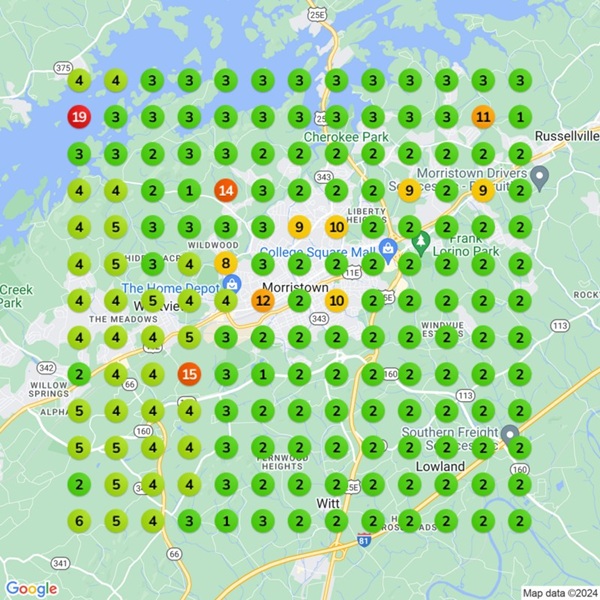
Navigating these algorithmic nuances requires a strategic approach. Businesses often find value in specialized tools, such as the Heatmap Audit Tool, to visualize their ranking performance across different locations and identify areas for improvement. For comprehensive strategic oversight, many businesses also rely on expert guidance in Google marketing management to ensure their local SEO efforts align with best practices and evolving algorithms.
The Role of Proximity and Relevance in Local Rankings
Distance, or proximity, is perhaps the most straightforward of the ranking factors. Google wants to show users businesses closest to them. If a user searches for “coffee shop,” Google uses their current location (or the location specified in the search, e.g., “coffee shop in downtown Chicago”) to prioritize nearby establishments. This means that local search results can differ dramatically based on where the searcher is physically located.
Relevance refers to how well a business’s Google Business Profile matches the user’s search query. If a user searches for “Italian restaurant,” Google will look for businesses categorized as Italian restaurants that have descriptions and services that align with that query. This factor emphasizes the importance of completing your GBP accurately and thoroughly, including selecting the most specific primary category and adding relevant secondary categories. For Service Area Businesses (SABs) that operate without a physical storefront (like plumbers or electricians), relevance is still key, but their address might be hidden and their service areas clearly defined. Strong location signals on your website and GBP help Google understand where you serve.
Understanding Prominence and Authority
Prominence is Google’s way of assessing how well-known and authoritative a business is, both online and offline. It’s a comprehensive factor influenced by several signals:
- Review Count and Star Rating:Businesses with more positive reviews and a higher average star rating are generally perceived as more prominent. Consumers are 91% more likely to select a business after reading positive reviews. This signals trust and quality to both Google and potential customers.
- Local Backlinks: Just as with traditional SEO, backlinks from other reputable websites (especially local ones) contribute to prominence. These links act as “votes of confidence” for your business.
- Directory Mentions and Citations:Consistent mentions of your Name, Address, and Phone number (NAP) across various online directories (Yelp, TripAdvisor, industry-specific sites) signal legitimacy and authority to Google.
- Website SEO: While not directly part of the Maps algorithm, your website’s organic SEO can indirectly influence your local prominence. A well-optimized, authoritative website suggests a prominent business.
- Brand Signals: Mentions of your brand across the web, social media engagement, and overall brand recognition can also contribute to your perceived prominence.
Google’s goal is to show the “best” local businesses, and prominence helps them identify which ones are truly reputable and popular within their community.
Optimizing Your Google Business Profile for Maximum Reach

Your Google Business Profile (GBP), formerly Google My Business, is the cornerstone of your local SEO strategy. It’s your free digital storefront on Google Search and Maps, providing essential information to potential customers. Optimizing it thoroughly is not just a suggestion; it’s a mandate for local visibility.
The first step is to claim and verify your GBP listing. This signals to Google that you are the legitimate owner and allows you to manage the information displayed. From there, meticulous optimization begins:
- Primary and Secondary Categories:Choose the most specific primary category that accurately describes your core business. Then, add relevant secondary categories to capture a broader range of searches.
- Complete Business Information: Fill out every section of your profile: accurate Name, Address, Phone (NAP), website, hours of operation (including special holiday hours), and a detailed business description.
- High-Quality Photos and Videos:Upload compelling images of your storefront, interior, products, and team. Visuals significantly increase engagement and give customers a better sense of your business.
- Products and Services: Clearly list all products and services you offer, with descriptions and pricing where applicable. This helps Google understand your offerings and match them to user queries.
- Google Posts: Regularly publish updates, offers, events, and news directly to your GBP. These posts appear in your profile and can drive engagement.
- Q&A Section: Monitor and answer customer questions. You can also proactively add frequently asked questions and their answers.
- NAP Consistency: Ensure the Name, Address, and Phone number on your GBP exactly match the information on your website and across all other online directories. Inconsistencies can confuse Google and hurt your rankings.
Here is a list of essential GBP optimization steps:
- Claim and Verify: Ensure ownership of your listing.
- Accurate Categories: Select primary and secondary categories precisely.
- Complete Details: Fill out all fields: NAP, hours, website, description.
- Visual Content: Upload high-resolution photos and videos.
- List Products/Services: Clearly detail your offerings.
- Regular Posts: Share updates, offers, and events.
- Engage in Q&A: Answer customer questions promptly.
- Monitor Reviews: Respond to all reviews, positive and negative.
Leveraging AI for Google Maps Marketing
The sheer volume of data and the constant need for updates can make GBP optimization a demanding task. This is where artificial intelligence (AI) is transforming Google Maps marketing. AI tools can analyze your GBP, identify gaps, suggest improvements, and even automate certain management tasks.
For example, a tool like Paige’s GBP Audit Tool offers a free AI analysis of your profile, pinpointing areas to enhance your visibility. This kind of Paige automation can help businesses quickly identify and fix ranking issues, ensuring their profiles are always performing at their best. From generating AI-driven descriptions that are keyword-rich yet natural to suggesting optimal posting times, AI can significantly boost the efficiency and effectiveness of your Google Maps marketing efforts. For businesses with multiple locations, AI can be particularly valuable, assisting with bulk verification and ensuring consistent optimization across all profiles, saving countless hours compared to manual management.
Maintaining NAP Consistency and Data Accuracy
NAP (Name, Address, Phone number) consistency is a foundational element of local SEO. Every mention of your business’s NAP across the internet—on your website, social media profiles, online directories, and review sites—is considered a “citation.” Google cross-references these citations to verify the legitimacy and accuracy of your business information.
Inconsistent NAP data can confuse search engines, leading to lower trust signals and ultimately, reduced local search rankings. If your phone number is listed differently on Yelp than on your Google Business Profile, Google might question which information is correct, potentially hurting your prominence.
To ensure NAP consistency:
- Audit Existing Listings: Use tools like BrightLocal or Whitespark to identify all online mentions of your business.
- Correct Inaccuracies: Manually update or use data aggregators (like Foursquare, Data Axle, Localeze) to push consistent information across a wide network of directories.
- Standardize Your NAP: Choose a single, consistent format for your business name, address, and phone number, and use it everywhere. For example, “Street” vs. “St.” or “Suite” vs. “Ste.”
- Avoid Suspensions: Google has website guidelines. Minor inconsistencies are usually fixable, but significant discrepancies or attempts to mislead can lead to GBP suspensions.
Maintaining this accuracy builds trust with search engines and ensures that potential customers always find the correct information, preventing frustration and lost business.
Advanced Strategies: Reviews, Citations, and Website Integration
Beyond the foundational optimization of your Google Business Profile, advanced strategies involving reviews, citations, and seamless website integration are critical for truly dominating local search. These elements collectively build your prominence and authority, signaling to Google that your business is well-regarded and reliable.
Building Prominence through Google Maps Marketing
Review acquisition is paramount. Google explicitly states that review count and star rating are factors in local search ranking. We need to actively encourage satisfied customers to leave reviews. This isn’t just about getting reviews; it’s about generating a steady stream, known as review velocity, and ensuring the sentiment is positive.
Strategies for acquiring reviews include:
- Directly asking: Train your staff to politely ask satisfied customers.
- Email requests: Send follow-up emails with a direct link to your Google review form.
- In-store prompts: Use QR codes on receipts, flyers, or at your checkout that link directly to your review page.
- Responding to all reviews: This shows customers you value their feedback and can even turn negative experiences into positive ones. Responding professionally and promptly (within 24-48 hours) is crucial. Keyword-rich reviews, where customers naturally mention the product or service they received, can also subtly boost relevance.
While tools like Yext and BrightLocal help manage citations, the real power comes from generating and managing reviews effectively. For businesses seeking to automate and optimize this process, advanced user engagement signals can be leveraged.
Local citations are mentions of your business’s NAP on other websites, even without a direct link back to your site. These act as trust signals for Google. Building them effectively involves:
- Major Directories: Ensure your business is listed accurately on prominent directories such as Yelp, Yellow Pages, Foursquare, and industry-specific sites (e.g., Avvo for lawyers, Zillow for real estate).
- Local Business Associations: Listing your business with local chambers of commerce or business groups.
- Local Blogs and News Sites: Seeking mentions or features in local publications.
- Sponsorships and Events: Sponsoring local events or participating in community activities can lead to valuable local mentions and even backlinks.
Integrating Website SEO with Google Maps Marketing
Your website plays a vital supporting role in your Google Maps marketing efforts. Google explicitly states that your website’s position in web results is a factor in local ranking. An SEO-friendly website can lead to better rankings in map results because if Google believes your website is relevant, it may believe your Business Profile is, too.
Key integration strategies include:
- Embedded Google Maps: Embed an interactive Google Map of your location on your contact page. This visually reinforces your physical presence.
- Geo-Targeted Content: Create specific landing pages for each of your locations (if you have multiple) or service areas. These pages should include localized content, local keywords, testimonials from local customers, and unique NAP information.
- Local Schema Markup: Implement schema markup (e.g., LocalBusinessschema) on your website to provide structured data about your business to search engines. This helps Google understand your business type, address, hours, and other key details.
- Mobile Responsiveness and Site Speed: Ensure your website loads quickly and is fully responsive on mobile devices. Given the mobile-first nature of local searches, a poor mobile experience can deter potential customers.
- Local Authority Building: Focus on acquiring high-quality local backlinks. SEO expert Nathan Gotch explains this as “The Relevancy Pyramid,” in which local link opportunities should be prioritized over broader, national ones. Guest blogging for local blogs, getting featured in local publications, and participating in local events are excellent ways to build these links.
By creating a cohesive strategy that links your GBP, local citations, and website SEO, we build a robust online presence that signals authority and relevance to Google, ultimately driving more local customers to your business.
The Evolution and Future of Local Search
Local SEO has undergone a profound transformation, evolving from the analog days of the Yellow Pages to the sophisticated, AI-driven landscape we navigate today. In the past, finding a local business meant flipping through thick phone books. The advent of the internet brought Yellowpages.com, bridging the gap between traditional and digital discovery.
The real revolution began with the widespread adoption of smartphones and mobile internet, ushering in the era of “near me” searches. These queries, often phrased as “restaurants near me” or “plumbers open now,” signified a user’s immediate intent and geographical need. The rise of mobile searches, particularly those with purchase intent, such as “can I buy” or “to buy” queries, further cemented local search as a critical driver of conversions.
Google’s own local search evolution is marked by the transformation of its business listing platform. What began as Google Local Business Center in 2005 eventually became Google My Business, and is now the Google Business Profile (GBP), reflecting its central role in local search. The Google Map Pack itself has also evolved, initially displaying up to 11 businesses, then shrinking to 7, and finally to the dominant 3-Pack we see today, making competition for those top spots fiercer than ever.
Tracking and Measuring Local SEO Performance
Effective local SEO is not a “set it and forget it” endeavor; it requires continuous monitoring and adaptation. Tracking performance allows us to understand what’s working, identify areas for improvement, and demonstrate ROI. Key metrics include:
- GBP Insights: Google Business Profile provides its own analytics dashboard, offering valuable data on how customers find your business (direct vs. discovery searches), where they view your listing (Search vs. Maps), and how they interact with it (calls, direction requests, website clicks).
- Call Tracking: Implement dedicated call-tracking numbers for your GBP and local landing pages to accurately measure phone leads generated directly from your local search efforts.
- Direction Requests: Monitoring the number of direction requests from your GBP provides a clear indicator of physical foot traffic intent.
- Website Clicks: Tracking clicks to your website from your GBP helps measure the traffic driven by your local presence. Using UTM parameters in your GBP website link enables more granular tracking in Google Analytics.
- Local Rank Tracking: Specialized local SEO tools let you track your business’s rankings for specific local keywords across different geographic areas, helping you understand your visibility within your service area.
By regularly analyzing these metrics, we can refine our local SEO strategies, ensuring they align with business goals and drive tangible results.
Future Trends: AI, Voice, and Immersive Search
The future of local SEO is dynamic and will be profoundly shaped by emerging technologies like artificial intelligence (AI), voice search, and augmented reality (AR).
Voice Search Optimization: With the proliferation of smart speakers and voice assistants, conversational queries are becoming increasingly common. Local businesses must optimize for natural language and long-tail keywords that mimic how people speak. For example, instead of “pizza restaurant,” a voice search might be “Hey Google, where’s the best pizza place near me that’s open late?” This emphasizes the importance of comprehensive GBP information and natural-language descriptions.
AI Overviews: Google’s AI Overviews are changing search behavior, often providing instant answers that reduce traditional website clicks while maintaining high visibility. For local businesses, this means focusing on accuracy and consistency across all data sources, as AI Overviews will pull information directly from your GBP and other reliable local sources. Entity clarity—ensuring Google clearly understands your business and its offerings—will be crucial for inclusion in these AI-generated summaries.
Augmented Reality (AR): Imagine a future where users can point their smartphone camera down a street and see overlays of business names, ratings, and even menus directly on their screen. AR could transform local discovery into an immersive, interactive experience. Businesses that embrace visual content and maintain highly detailed, accurate GBPs will be well-positioned for this shift.
These trends highlight the need for local businesses to stay agile, continuously update their strategies, and leverage new technologies to maintain and enhance their local visibility. The goal remains the same: connect with local customers effectively, but the tools and tactics will continue to evolve.
Frequently Asked Questions about Local SEO and Google Maps Marketing
How long does it take to see results from local SEO and Google Maps marketing?
The timeline for seeing results from local SEO and Google Maps marketing can vary significantly based on several factors, including the competitiveness of your industry, your starting point, and the consistency of your efforts. Typically, businesses can start to see initial movement and improvements in visibility within several weeks after implementing core optimizations, such as completing their Google Business Profile, establishing a consistent review cadence, and ensuring NAP consistency. However, for more substantial and sustained ranking improvements, especially in competitive markets, it often takes 2-3 months of continuous effort. This is not a one-time fix but an ongoing process that requires regular maintenance and adaptation to algorithm updates.
What is the most important ranking factor for Google Maps?
While all ranking factors are interconnected, Google explicitly states that the three most important factors for local search are relevance, distance, and prominence. There isn’t a single “most important” factor, as they all work in concert to determine your ranking.
- Relevance: How well your business matches the user’s search query.
- Distance: How far your business is from the searcher’s location.
- Prominence: How well-known and authoritative your business is, based on factors like reviews, links, and web mentions. Think of them as the “holy trinity” of local search. A complete and well-optimized Google Business Profile that accurately represents your business and consistently gathers positive reviews will naturally address all three.
Can a business rank on Google Maps without a physical office?
Yes, a business can rank on Google Maps without a physical office for customers to visit, but this depends on the business model. These are typically known as Service Area Businesses (SABs), such as plumbers, electricians, or cleaning services, which travel to their customers. For SABs, Google allows you to hide your physical address on your Google Business Profile while still defining your service areas. This ensures you appear in searches within those areas without misleading customers about a storefront.
Hybrid models, where a business has a physical location but also offers services at customer sites, can also manage their visibility effectively. The key is to adhere strictly to Google’s guidelines for your specific business type and ensure your verification methods align with their requirements.
Conclusion
In the dynamic digital age, maximizing local visibility is no longer a luxury but a fundamental requirement for small businesses with physical locations or defined service areas. We’ve explored how local SEO and Google Maps marketing serve as your most potent tools, directly connecting you with conversion-ready customers in your community. From understanding Google’s intricate ranking algorithm—governed by relevance, distance, and prominence—to meticulously optimizing your Google Business Profile, every step contributes to your digital footprint and, ultimately, your bottom line.
The journey through local SEO is ongoing, requiring consistent effort to acquire and manage reviews, build valuable local citations, and seamlessly integrate your website. As we look towards an AI-driven future, with the rise of voice search and immersive AR experiences, the importance of a robust, accurate, and engaging online presence will only intensify.
By embracing these strategies and leveraging advanced solutions like Paige automation to streamline your efforts, you can ensure sustainable local growth, gain a significant competitive advantage, and solidify your position as the go-to choice for customers in your area. The digital storefront on Google Maps is waiting for you to unlock its full potential.