How Do Scammers Find Out That Someone Owns Cryptocurrency?
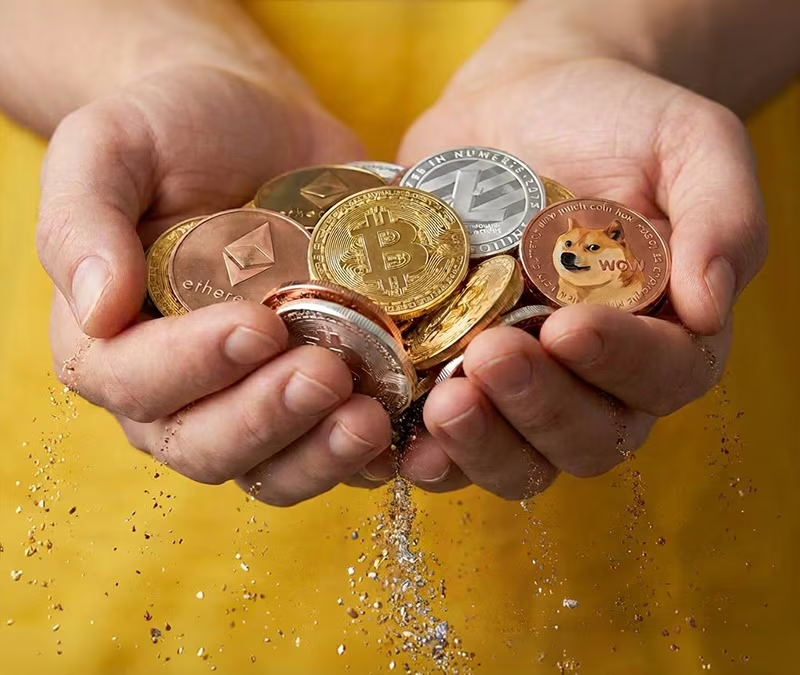
Many crypto scams begin long before an attacker tries to steal a password or a seed phrase. First, the scammer needs to identify a potential target. In 2026, several data incidents involving hardware wallet customers showed how ordinary personal information can reveal that someone is likely to own cryptocurrency.
Names, email addresses, phone numbers, shipping addresses, social media posts, and purchase history can all become clues. None of this information gives direct access to a wallet, but together it can help criminals create highly convincing phishing messages and impersonate legitimate companies.
Where Can This Information Come From?
One obvious source is a data breach. In August 2026, Trezor reported that a breach at logistics provider ShipMonk exposed customer order information, including names, email addresses, phone numbers, and shipping addresses. Trezor later said the incident affected more than 80,000 customers in total. The wallets and private keys themselves were not compromised.
SafePal reported a similar incident in the same month. Unauthorized access to part of its order information affected about 39,800 customers. The exposed data included names, contact details, shipping addresses, and purchase information, while seed phrases, private keys, and wallet passwords were not involved.
For a scammer, however, the order information alone can be valuable. Knowing that a person recently bought a hardware wallet makes it much easier to send a believable message about a fake firmware update, a delivery problem, or an alleged security alert.
Social Media Can Reveal More Than It Seems
Data leaks are not the only source. People often reveal their interest in crypto themselves. A public post about buying Bitcoin, a photo of a hardware wallet, a comment under a crypto exchange account, or a question in a Telegram or Reddit community can all show that someone is involved with digital assets.
Even without publishing a wallet balance, a person may reveal enough information to become a target. A scammer can combine a name from social media with an email address from an old leak, a phone number from another database, and information about a recent crypto purchase.
This is why information that looks harmless in isolation can become much more sensitive when several pieces are connected.
Public Wallet Addresses Can Also Create a Trail
Blockchain transactions are public on many networks. A wallet address does not automatically reveal the real name of its owner, but problems can arise when a person publicly connects that address to their identity.
For example, someone may post an address to receive a payment, donation, or prize. If that same address is later used for other transactions, anyone can view its activity through a blockchain explorer. This does not provide access to the funds, but it may reveal transaction history and, in some cases, the approximate value of the assets associated with the address.
For this reason, Millpay specialists recommend avoiding unnecessary links between public personal profiles and crypto wallet addresses. There is rarely a good reason to publish information that allows strangers to connect your real identity with your financial activity.
Why Leaked Personal Data Is Dangerous
The main risk is targeted phishing. A generic scam message is easy to ignore. A message that includes your real name, mentions the hardware wallet you purchased, and refers to the correct delivery address is much more convincing.
Attackers may pretend to represent a wallet manufacturer, exchange, delivery company, or technical support service. They can ask the victim to follow a link, install an update, confirm account details, or enter a seed phrase to protect the wallet from an alleged threat.
The leaked personal data does not steal the cryptocurrency by itself. Its value is that it helps the attacker gain trust and persuade the victim to reveal information that actually does provide access to the assets.
How to Reduce Your Digital Footprint
Complete anonymity is difficult, but there are several simple ways to reduce unnecessary exposure. Avoid posting screenshots of balances, wallet applications, transaction details, or hardware wallets on public accounts. Do not publicly connect a personal email address or phone number with crypto activity unless there is a real need to do so.
It is also useful to use separate email addresses for important financial services and everyday registrations. Messages about unexpected wallet problems, refunds, security checks, or urgent updates should be verified through the official website rather than through links included in the message.
Millpay experts also advise treating personal information related to crypto purchases as part of your security perimeter. An email address or shipping detail may not look as sensitive as a private key, but it can still help an attacker build a convincing social-engineering scenario.
The Key Point
Scammers do not always need to hack a blockchain or break into a wallet to find cryptocurrency owners. Often, they start with ordinary information collected from data breaches, online purchases, social networks, forums, and public blockchain activity.
The less information an attacker can connect to your crypto activity, the harder it becomes to create a targeted scam. Protecting cryptocurrency therefore means protecting not only private keys and seed phrases, but also the personal data that can reveal where and how you use digital assets.