Top EHR Software Vendors for Small Practices in 2026 Comparison

The Evolution of Private Practice EMR in 2026
The healthcare landscape is constantly evolving, and for private practices, staying ahead means embracing technological advancements, particularly in Electronic Medical Records (EMR) and Electronic Health Records (EHR) systems. By 2026, the distinction between these terms, while subtle, has become increasingly important. An EMR typically refers to the digital version of a patient’s chart within a single practice, while an EHR is designed for broader interoperability, allowing patient data to be shared across different healthcare settings. Most modern practices now utilize EHRs due to their support for care coordination and compliance requirements, enabling patient records to follow them across organizations, unlike EMRs which are often confined to a single facility.
The journey towards digital transformation has been driven by a critical need to alleviate administrative burdens and combat physician burnout. Statistics show that physicians using traditional EHRs can spend twice as much time interacting with their system as they do with patients. This imbalance highlights the urgency for more intuitive and efficient solutions. The right EHR system in 2026 is not just a digital filing cabinet; it’s a comprehensive tool designed to streamline workflows, enhance patient care, and improve financial outcomes.
The shift to digital records has also brought into focus the need for robust, integrated systems. Practices often face unexpected costs, with providers spending an average of $31,710 more per year than anticipated on their EHR, totaling around $117,672 annually. This emphasizes the importance of understanding the total cost of ownership and selecting a system that offers long-term value and scalability.
Essential Behavioral Health Practice Solutions for Modern Clinicians
For healthcare professionals, particularly those in specialized fields, the choice of an EMR/EHR system is paramount. This is especially true for practices focusing on Behavioral health practice solutions, where specific documentation needs, privacy concerns, and billing complexities demand a tailored approach. Ensuring HIPAA compliance and robust data security is non-negotiable. Modern systems must offer features like encryption, secure cloud-based accessibility, and adherence to stringent regulatory standards to protect sensitive patient information.
The debate between cloud-based and server-based EMRs is also a significant consideration for private practices. Cloud-based systems, hosted on remote servers and accessed via the internet, offer numerous advantages. They provide automatic updates, remote access from any device, and generally lower IT infrastructure costs. Data is typically encrypted and stored securely off-site, with real-time syncing across locations. In contrast, server-based systems require on-premise hardware, which means higher upfront costs, ongoing maintenance, and the need for dedicated IT support. While they offer complete control over data, they can be less flexible for remote work and require manual updates and backups. For many small private practices, the flexibility, cost-effectiveness, and accessibility of cloud-based solutions make them a more attractive option.
Feature Cloud-Based EMR Server-Based EMR Accessibility Remote access from any device, any location Limited to on-site network, less remote access IT Costs Lower upfront costs, subscription model, no server maintenance High upfront hardware costs, ongoing maintenance Updates Automatic updates by vendor Manual updates, often requiring IT intervention Data Security Vendor-managed, often robust encryption & backups Practice-managed, requires internal expertise Scalability Easily scalable with practice growth Can be costly and complex to scale Control Less direct control over infrastructure Full control over data and hardware Specialized Behavioral Health Practice Solutions for Therapy and Mental Health
The unique demands of therapy, behavioral health, and mental health practices necessitate EMR systems designed with their specific workflows in mind. Solutions like SimplePractice and ClinicNote have emerged as leaders in this niche. SimplePractice, for instance, boasts a vast network, trusted by over 250,000 practitioners and serving more than 20 million clients. It offers integrated telehealth, a comprehensive template library, insurance tools, scheduling, billing, documentation, and ePrescribe capabilities, making it a robust choice for health and wellness professionals. Its emphasis on streamlining administrative tasks allows practitioners to focus more on client care.
ClinicNote specifically targets private practices and university clinics, supporting disciplines such as speech therapy, occupational therapy, physical therapy, counseling, psychology, and behavioral health. Trusted by over 7,000 clinicians across 175+ practices, ClinicNote prides itself on being user-friendly, secure, and affordable. It offers customizable documentation, including SOAP notes, scheduling, billing, and a patient portal, with a unique offer of three free custom templates to replicate a practice’s existing documents. This human-centered design approach, coupled with responsive support, makes it particularly appealing for therapists who need tailored tools without excessive complexity.
Scaling with Integrated Behavioral Health Practice Solutions
For private practices looking to grow and enhance their financial performance, integrated EMR solutions that offer comprehensive practice management features are crucial. OptiMantra, for example, is highlighted as an excellent choice for small practices due to its comprehensive features, affordability, and strong support. Clinics using OptiMantra have reported an average 37% increase in revenue in their first year. This growth is often attributed to streamlined operations, automated patient engagement tools, and robust billing functionalities.
These systems go beyond basic charting, offering capabilities that support multi-specialty practices and group scalability. Features like advanced analytics, automated patient reminders, and longitudinal care plans help practices manage patient populations more effectively, reduce no-shows, and ultimately boost their bottom line. The ability to integrate with various aspects of practice operations, from scheduling to billing and patient communication, creates a cohesive ecosystem that supports growth and efficiency.
Comparing Template-Free AI Systems vs. Traditional EHRs
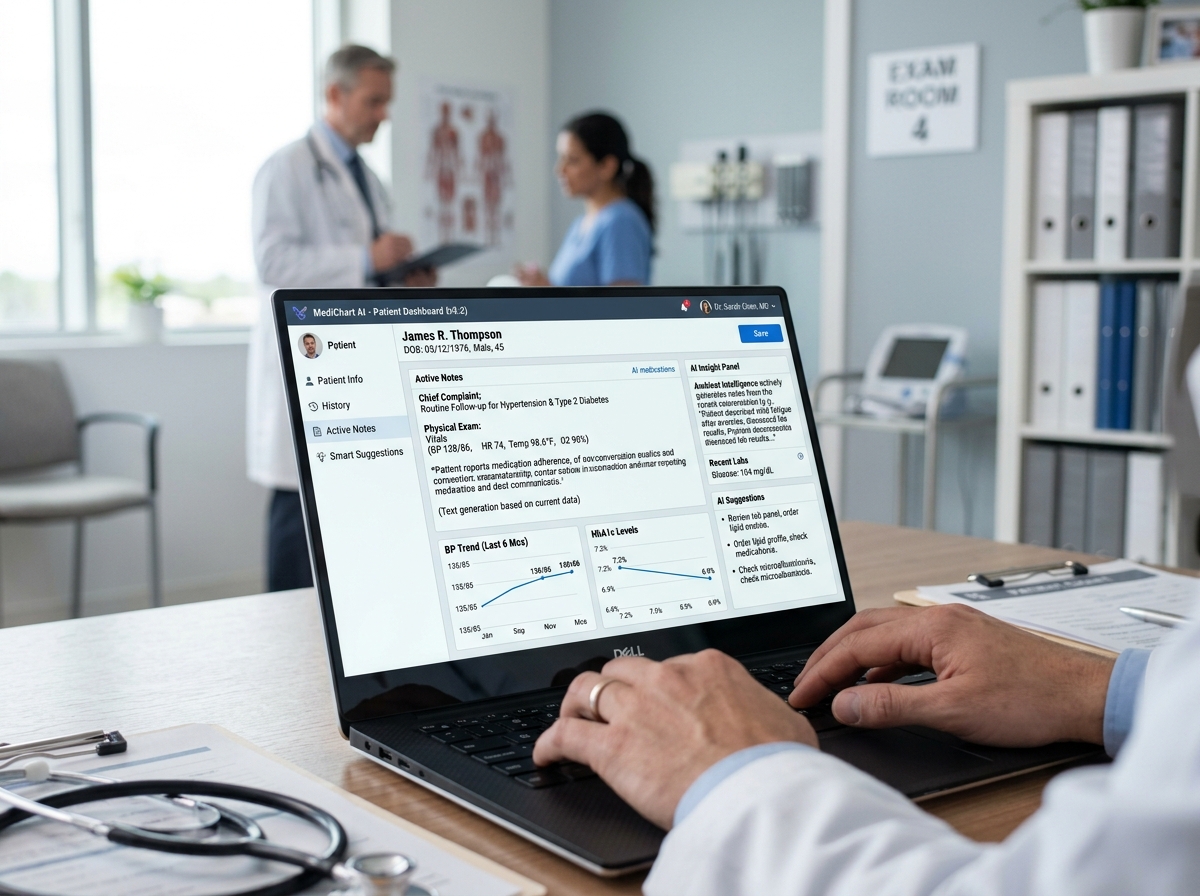
One of the most significant advancements in EMR technology for private practices is the emergence of template-free, AI-powered systems. These solutions represent a departure from traditional template-based EHRs, which have often been criticized for forcing rigid workflows and increasing data entry time. Praxis EMR stands out in this category, promoting a “template-free” approach that prioritizes physician autonomy and personalized patient care.
Praxis argues that traditional template-based EHRs can cause physicians to spend twice as much time on data entry as with patients, leading to dissatisfaction and reduced quality of care. Their solution, powered by a “Concept Processor” and “Reflective Ambient Intelligence,” learns and adapts to a physician’s unique style and knowledge base. This means the system gets faster and more intuitive with use, allowing doctors to document in their own words rather than being confined to predefined fields. Users have reported saving 2-3 hours daily on documentation, significantly enhancing efficiency and reducing administrative burden. Praxis has also received high user satisfaction rankings, being rated #1 in categories like usability and overall satisfaction after reviewing hundreds of EHR systems. This approach aims to restore the focus on the patient, allowing the EMR to conform to the physician’s practice, not the other way around.
The Rise of AI-Powered Efficiency for Solo Providers
For solo practitioners and small practices, efficiency is paramount. AI-powered features in EMRs can dramatically improve workflow and reduce the time spent on administrative tasks. EMedicalNotes, a physician-built EMR, exemplifies this trend with its AI-powered note generation. This system can listen to patient conversations or process dictations, then merge this information with customizable templates to automatically generate structured visit notes. This “Voice-In, Chart Out” technology significantly reduces transcription costs and the need for manual data entry, allowing clinicians to focus on patient interaction rather than typing.
EMedicalNotes emphasizes integrating clinical intuition into every click, having been designed by a physician for physicians over 20 years. Its Linux-powered reliability ensures stable performance and clientless remote access, contributing to paperless efficiency. Such systems are particularly beneficial for solo providers who need to maximize their time and resources, providing a sophisticated yet user-friendly tool that adapts to their unique practice style.
Traditional Template Systems and Customization
While template-free systems offer unique advantages, traditional template-based EHRs continue to evolve, offering robust customization options that cater to the diverse needs of private practices. Practice Fusion, for example, has established itself as a dominant EHR for 1-3 clinician practices, known for its adaptive charting and flexible billing. This system allows practices to customize their EHR to fit their specific needs, offering a wide range of template libraries and custom flowsheets for tracking patient health data.
Practice Fusion’s strength lies in its ability to replicate existing workflows, making the transition from paper records or other EHRs smoother. It emphasizes allowing providers to “practice the way you want” through e-prescribing, adaptive charting, and flexible billing. The system’s high user-recommended metrics and top rankings in national surveys highlight its effectiveness for small and private practices seeking a customizable, feature-rich solution without the complexity or cost of enterprise-level systems. Providers can choose to use only the features they need, avoiding unnecessary expenses.
Key Features and ROI for Small Practice EMR Selection
When selecting an EMR for a small private practice, the decision extends far beyond just functionality; it’s a significant financial investment that must demonstrate a clear return on investment (ROI). As noted, providers often overspend on their EHRs, making careful consideration of costs and benefits essential. The average overspend of $31,710 annually, contributing to a total annual cost of $117,672, underscores the need for thorough evaluation of the total cost of ownership, including initial setup, ongoing subscriptions, maintenance, and potential add-ons.
Key features that directly impact ROI include robust billing integration, efficient e-prescribing, integrated telehealth capabilities, and seamless lab connectivity. These features not only streamline operations but also contribute to increased revenue and reduced administrative burden. For instance, automated electronic prior authorizations can save practices up to 20 hours a week on paperwork, allowing staff to focus on more productive tasks. Choosing an EMR that provides these essential tools can lead to significant cost savings and revenue generation.
Essential Integrations for Private Practices
Modern private practices require an EMR that acts as a central hub, integrating various critical functions to create a cohesive workflow. Tebra’s EHR, built for independent healthcare practices, exemplifies this comprehensive approach. It connects all workflows—from charting and patient records to scheduling, billing, and telehealth—into a single, cloud-based system.
Essential integrations include:
- Integrated Billing: Seamlessly connects clinical documentation with billing processes, facilitating eligibility checks, claims submission, and payment processing. This can help practices save substantial amounts, with one practice saving $2.75 million and another $160,000 in streamlined workflows.
- E-prescribing: Enables electronic prescription of medications, including controlled substances in compliant systems, reducing errors and improving patient safety.
- Electronic Labs: Allows for direct ordering of lab tests and electronic receipt of results, eliminating manual processes and improving turnaround times.
- Patient Portals: Secure online platforms for patients to access their health information, schedule appointments, request refills, and communicate with their provider, leading to a 95% boost in online appointment requests for some Tebra users.
- Online Scheduling & Automated Reminders: Reduces no-shows and administrative tasks by allowing patients to book appointments online and sending automated reminders via text, email, or phone. This can contribute to significant new patient growth, with one practice seeing a 500% increase.
These integrations are vital for improving efficiency, enhancing patient experience, and supporting practice growth.
Evaluating Customer Support and Implementation Ease
The best EMR system in the world is only as good as its implementation and the support behind it. For small private practices, ease of implementation and responsive customer support are critical factors. Onboarding timelines can vary significantly, with some systems like Practice Fusion boasting that most private practices are fully operational within 30-60 days. This quick setup minimizes disruption and allows practices to realize the benefits of their new system sooner.
Key aspects to evaluate include:
- Dedicated Specialists: Many vendors offer dedicated support teams or specialists to guide practices through the setup process, data migration from previous systems (or paper records), and initial training.
- Training Resources: Comprehensive training materials, including video tutorials, webinars, and live chat support, ensure that staff can quickly learn and effectively use the new EMR. ClinicFor example, emphasizes “human support” and easy training.
- User Ratings and Reviews: Platforms like G2 and Capterra offer valuable insights into user satisfaction with customer support and ease of use. OptiMantra, for instance, has high ratings (5/5 on G2, 4.8/5 on Capterra) for these aspects, indicating strong user experience.
- Ongoing Support: Beyond initial implementation, access to timely and effective ongoing support is crucial for addressing issues, utilizing new features, and ensuring long-term system reliability.
A smooth implementation process and readily available support can significantly reduce stress, save time, and prevent costly operational disruptions for private practices.
Implementation Strategies and Switching from Paper Records
Transitioning to a new EMR, especially from paper records, is a significant undertaking that requires careful planning and execution. The “paper-record paradigm” of many older EHRs often leads to rigid templates and increased data entry, highlighting the need for a thoughtful digital transformation. Key steps include thorough data migration, detailed workflow analysis, and a clear understanding of regulatory requirements like information blocking. Robust EMRs like EMedicalNotes and Tebra offer features such as audit trails and role-based permissions to ensure HIPAA compliance and data integrity throughout this process.
Transitioning from Legacy Systems or Free EMRs
For practices considering a switch from an existing legacy system or even a free EMR, several factors warrant close attention. While free or low-cost EMRs like Practice Fusion might seem appealing initially, they often come with hidden costs and limitations. OptiMantra’s analysis suggests that free EMRs can lead to higher long-term expenses due to limited functionality, security vulnerabilities, lack of live support, and costly upgrades as the practice grows. Hackers actively target small practices for valuable patient data, making robust security a non-negotiable feature that free options often lack.
Premium options, while requiring a larger upfront investment, typically offer greater scalability, comprehensive features, and dedicated support, reducing the risk of costly data migrations or system overhauls in the future. Practices should carefully evaluate subscription models, potential add-ons, and the long-term reliability of the vendor.
Specialty-Specific Considerations for OT, PT, and SLP
Different medical specialties have distinct documentation and billing requirements, and EMR systems must be flexible enough to accommodate them. For occupational therapy (OT), physical therapy (PT), and speech-language pathology (SLP) practices, specialized EMRs are essential. ClinicFor example, is designed specifically for these disciplines, supporting over 7,000 clinicians, including those in university clinics.
These systems offer:
- Customized Documentation: Tailored templates for SOAP notes, progress tracking, and discipline-specific assessments, allowing for precise and efficient charting.
- Specialized Billing Codes: Support for therapy-specific billing codes like 97110 and 97112, ensuring accurate claims submission and reducing billing errors.
- Pediatric Workflows: Features adapted for pediatric practices, including age-appropriate documentation and communication tools.
- Audiology Support: Specific functionalities for audiology practices, addressing their unique charting and reporting needs.
Choosing an EMR that understands and supports the nuances of a specific specialty can significantly improve efficiency, compliance, and ultimately, patient care.
Frequently Asked Questions about Private Practice EMRs
What is the best EMR for a solo private practice in 2026?
The “best” EMR for a solo private practice in 2026 largely depends on the specific needs of the practice, including its specialty, budget, and desired level of customization. However, systems that offer a balance of comprehensive features, ease of use, strong customer support, and scalability are generally preferred. Praxis EMR is often cited for its template-free, AI-driven approach that adapts to the physician’s style, while SimplePractice and ClinicNote are highly rated for behavioral health and therapy specialties due to their tailored features and affordability. OptiMantra is also recognized for its robust features and significant revenue growth for small practices. It’s crucial to evaluate factors like integration capabilities (billing, telehealth, e-prescribing), HIPAA compliance, and the overall total cost of ownership.
How do AI-powered EMRs reduce administrative time for doctors?
AI-powered EMRs significantly reduce administrative time by automating many documentation tasks that traditionally consume hours. For instance, systems like Praxis EMR, with its Concept Processor, learn from a doctor’s input and adapt to their unique charting style, making documentation faster and more intuitive over time. EMedicalNotes utilizes AI to generate structured notes from voice conversations or dictations, effectively turning “voice-in” into “chart-out” and minimizing manual typing. These capabilities allow physicians to document in their own words, eliminate redundant data entry, and streamline the note-taking process, freeing up valuable time that can be redirected to patient care or personal life, with some users reporting savings of 2-3 hours daily.
What are the risks of using a free EMR system for a small clinic?
While free EMR systems might seem like a cost-effective solution for small clinics, they often come with significant risks and limitations. These include:
- Limited Functionality: Free systems typically lack advanced features, integrations, and customization options essential for efficient practice management.
- Security Vulnerabilities: They may not offer the robust security measures, encryption, and HIPAA compliance necessary to protect sensitive patient data, making practices vulnerable to breaches and regulatory penalties.
- Lack of Support: Free EMRs often provide minimal to no customer support, leaving practices without assistance during critical issues or implementation challenges.
- Hidden Costs: While “free” initially, they may have hidden upgrade costs for essential features, data migration fees, or charges for additional users, which can quickly accumulate.
- Scalability Issues: As a practice grows, a free EMR may not be able to scale, forcing a costly and disruptive migration to a new system.
- Data Ownership Concerns: The terms of service for free systems can sometimes be ambiguous regarding data ownership and access, posing potential long-term risks.
For these reasons, many experts advise against free EMRs for anything beyond very basic, temporary needs, recommending low-cost yet scalable paid options instead.
Conclusion
The landscape of private practice EMRs in 2026 is defined by innovation, specialization, and a renewed focus on physician and patient experience. The evolution from basic digital record-keeping to sophisticated, AI-powered systems offers unprecedented opportunities for efficiency and enhanced care. For private practice owners, the decision of which EMR to choose is pivotal, impacting everything from daily operations to long-term financial health.
We’ve explored the critical distinctions between EMR and EHR, the benefits of cloud-based solutions, and the specialized needs of behavioral health and therapy practices. The emergence of template-free, AI-driven systems like Praxis and EMedicalNotes promises to revolutionize charting by adapting to the clinician’s style, while customizable template-based systems like Practice Fusion continue to offer robust solutions for specific needs. Key features such as comprehensive integrations for billing, e-prescribing, and telehealth, alongside strong customer support and ease of implementation, remain non-negotiable for maximizing ROI and reducing administrative burdens.
The future of clinical documentation in private practices lies in systems that balance cost-effectiveness with advanced functionality, prioritize data security and compliance, and offer the flexibility to adapt to diverse specialties and evolving practice needs. By carefully evaluating these factors and considering the long-term vision for your practice, you can select an EMR that not only streamlines operations today but also supports sustained growth and exceptional patient care for years to come.