Empowering Consumers with AI-Driven Debt Collection Defense Tools
The Crisis of Unanswered Summonses in Consumer Litigation
The moment a summons arrives, it often signals the start of a stressful and confusing period for consumers. Many individuals, unprepared for legal action, find themselves facing critical decisions under immense pressure. The most immediate and severe consequence of not responding to a lawsuit is a default judgment. This legal ruling occurs when a defendant fails to answer a complaint within the stipulated timeframe, effectively conceding the case to the plaintiff.
A default judgment can have devastating financial repercussions. It grants creditors the legal authority to pursue aggressive collection tactics, including wage garnishment, where a portion of an individual’s earnings is directly withheld, or bank levies, which allow creditors to seize funds from bank accounts. Beyond these immediate impacts, a default judgment can also lead to liens on assets, such as real estate, further jeopardizing a consumer’s financial stability and making asset protection a significant concern. The entire process underscores the importance of judicial efficiency, as courts rely on prompt responses to move cases forward. For pro se defendants – those representing themselves – understanding and adhering to these procedural requirements is paramount.
The Cost Barrier of Traditional Legal Representation
For many, the first instinct upon receiving a summons is to seek legal counsel. However, the cost of traditional legal representation often presents an insurmountable barrier. Attorney fees, typically structured around billable hours, can quickly escalate, making comprehensive legal defense an unaffordable luxury for average consumers. Hourly rates, which can range from hundreds to thousands of dollars, coupled with retainers and additional costs for research, filings, and court appearances, push legal services out of reach for those already struggling with debt.
This financial vulnerability highlights a significant access to justice issue. While legal aid organizations exist, their resources are often stretched thin, serving only a fraction of those in need. The prohibitive cost forces many consumers to either attempt self-representation without adequate tools or, worse, to ignore the lawsuit entirely, leading directly to the perils of a default judgment.
The Critical Deadlines of State Courts
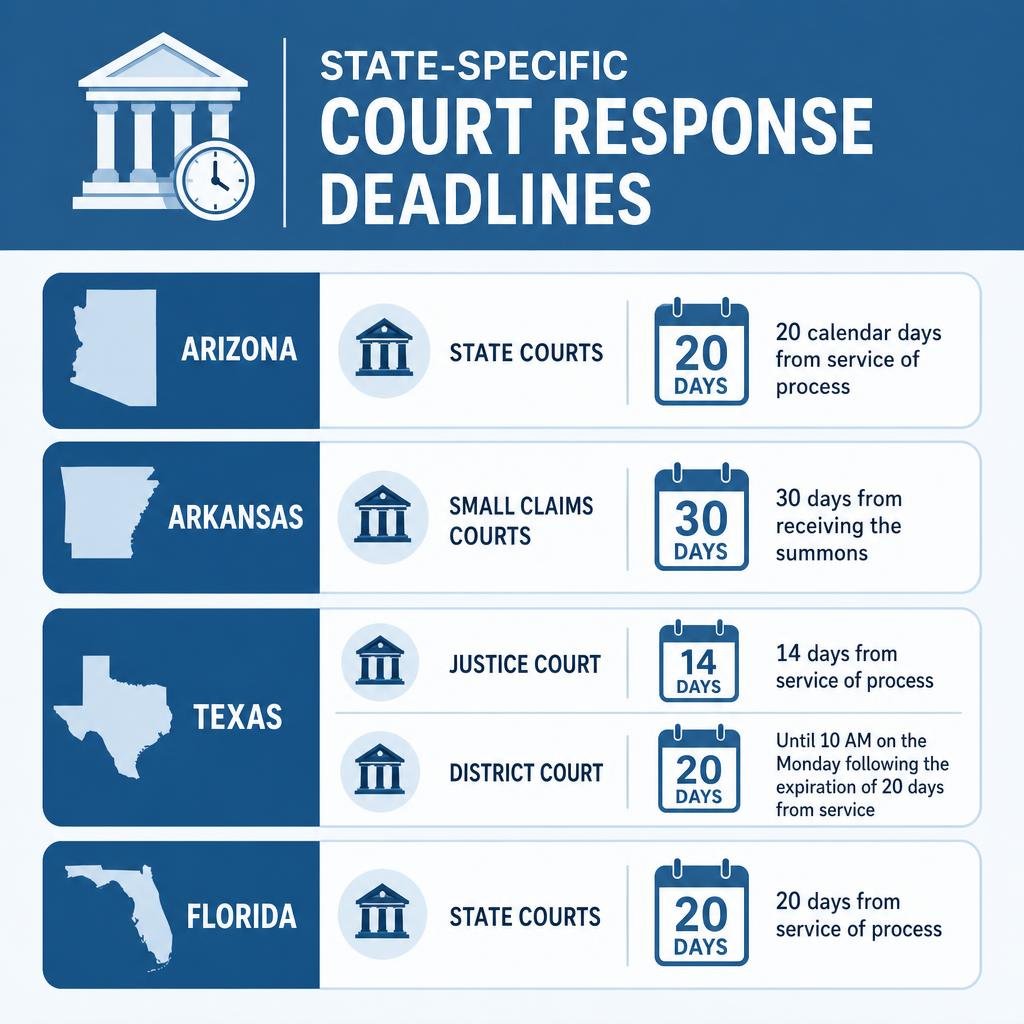
Responding to a lawsuit is not just about what to say, but also when to say it. Court deadlines are strict and non-negotiable, varying significantly by jurisdiction and court type. Missing a deadline, even by a day, can result in a default judgment, regardless of the merits of one’s defense.
For instance, in Arizona, a defendant typically has 20 calendar days from the service of process to file an answer to a lawsuit. Arkansas small claims courts demand an answer within 30 days of receiving the summons. Texas courts present a more nuanced scenario: in justice court, defendants might have as little as 14 days, while in district court, the deadline is often “until 10 am on the Monday following the expiration of 20 days” from service. Florida, similar to Arizona, generally requires an answer within 20 days. These state-specific response windows underscore the complexity and the urgent need for accurate, timely action.
Understanding Court Answer Drafting Services
In response to these challenges, court answer drafting services have emerged as a vital resource, particularly for self-represented litigants. These services specialize in preparing legal documents that comply with court rules, offering a middle ground between expensive traditional legal representation and the daunting task of navigating the legal system entirely alone.
A court answer drafting service acts as a legal scribe, providing administrative support and leveraging litigation technology to generate court-ready documents. Unlike attorneys who offer legal advice and strategy, these services focus on the technical aspects of document creation, ensuring procedural formatting, correct legal terminology, and adherence to court-specific requirements. They empower individuals by providing the necessary paperwork to formally respond to a lawsuit, preventing default judgments and allowing them to participate in the legal process.
How Drafting Services Differ from Traditional Representation
It is crucial to understand that court answer drafting services are distinct from traditional legal representation. When you engage a lawyer, you enter into an attorney-client relationship where the attorney provides legal advice, develops a strategy, represents you in court, and acts as your advocate. This comprehensive service covers all aspects of your case.
In contrast, drafting services operate under a limited scope. They do not offer legal advice, strategic counsel, or court representation. Their role is to assist self-represented litigants (pro se individuals) by preparing the necessary documents based on information provided by the client. This model empowers individuals to handle their own cases while ensuring their paperwork meets the strict formal requirements of the court. The responsibility for understanding the legal implications, making strategic decisions, and presenting the case in court remains with the self-represented litigant. This distinction is vital for avoiding the unauthorized practice of law and for managing client expectations.
Types of Litigation Documents Automated Systems Can Generate
The capabilities of modern drafting services, especially those incorporating automation and AI, extend beyond simple answers to complaints. These sophisticated systems can help generate a wide array of litigation documents, ensuring they are formatted correctly and include the necessary legal components.
Common documents that automated systems can assist with include:
- Civil Answers: The primary document responding to a plaintiff’s complaint, addressing each allegation.
- Motions to Dismiss: Requests to the court to throw out a case or specific claims due to legal deficiencies.
- Discovery Responses: Formal replies to interrogatories, requests for production of documents, and requests for admissions during the discovery phase of a lawsuit.
- Affidavits: Sworn statements of fact used as evidence in court proceedings.
- Certificates of Service: Documents attesting that copies of filed papers have been properly sent to all parties in a case.
- Fee Waivers: Applications to the court to proceed without paying filing fees due to financial hardship.
These services streamline the often-complex process of document creation, making it more accessible and manageable for individuals navigating the legal system without an attorney.
The Role of AI in Modern Debt Collection Defense
The integration of artificial intelligence is revolutionizing the landscape of court answer drafting services, particularly in the realm of debt collection defense. AI-powered tools bring unprecedented speed, accuracy, and efficiency to document preparation, transforming how consumers can respond to legal challenges.
These platforms utilize natural language processing (NLP) to analyze legal complaints, extract key allegations, and identify relevant legal concepts. They can then leverage extensive legal research databases to suggest appropriate responses and affirmative defenses. For instance, tools designed for specific debt collection defense scenarios, like those offered by ParkerGPT debt collection defense, can quickly synthesize facts and legal principles to generate comprehensive drafts. This automated drafting process significantly reduces the time and effort traditionally required, minimizing human error and ensuring procedural compliance. The result is a more robust and timely defense for consumers.
Comparing AI-Powered Tools to Human Legal Professionals
The emergence of AI in legal drafting naturally invites comparisons with human legal professionals. While AI tools excel in certain areas, understanding their strengths and limitations relative to human expertise is key.
Drafting Speed and Cost Efficiency: AI-powered tools can generate initial drafts of complex legal documents in minutes, not hours or days. This drastically reduces drafting time and, consequently, the cost associated with document preparation. For example, some AI services claim to reduce brief drafting time from 20+ hours to under an hour, or transform an 8-hour task into 90 minutes (10 minutes AI drafting + 80 minutes refinement). This efficiency translates into significant cost savings for consumers, especially when compared to the hourly rates of attorneys.
Citation Accuracy and Compliance: Advanced AI systems are designed to ensure high citation accuracy, adhering to standards like Bluebook formatting and verifying legal sources from official databases. They can apply state-specific rules, statutes, and procedural requirements, auto-formatting documents to local court rules across various jurisdictions. However, while AI constructs logically sound arguments and verifies citations, the nuanced application of legal principles and strategic interpretation often requires human judgment.
Strategic Refinement and Human Verification: While AI can produce comprehensive first drafts, human legal professionals bring strategic insight, critical thinking, and the ability to tailor arguments to unique case facts. Many reputable AI drafting services incorporate a human verification layer, where legal experts review the AI-generated output for accuracy, completeness, and strategic alignment before final delivery. This hybrid approach combines the speed and cost-effectiveness of AI with the indispensable strategic and ethical oversight of human professionals. It’s often recommended that AI-generated drafts be reviewed like work from a junior associate—requiring refinement and critical evaluation by an attorney.
How AI Handles Complex Legal Arguments and Affirmative Defenses
AI’s capability to handle complex legal arguments and affirmative defenses is a significant advantage for court answer drafting services. By analyzing the specifics of a complaint and comparing them against a vast legal knowledge base, AI can identify and integrate pertinent defenses.
For debt collection cases, AI can help articulate common affirmative defenses such as:
- Statute of Limitations: Identifying if the legal time limit for suing on a debt has expired (e.g., 4 years for most debts in Texas, 6 years in Michigan).
- Lack of Standing: Arguing that the plaintiff (often a debt buyer) does not have the legal right to sue because they cannot prove ownership of the debt.
- Chain of Title: Requiring the plaintiff to demonstrate a clear, unbroken record of debt ownership from the original creditor to the current plaintiff.
- Debt Validation: Demanding proof that the debt is legitimate and owed by the defendant.
- Accord and Satisfaction: Asserting that the debt has already been settled or paid in full.
- Unconscionability: Arguing that the terms of the original agreement were so unfair as to be unenforceable.
AI tools can construct these arguments using established legal structures like IRAC (Issue, Rule, Application, Conclusion), ensuring they are logically sound and supported by relevant legal authority. This capability significantly enhances the quality and effectiveness of self-represented litigants’ responses.
Navigating Jurisdictional Rules and Procedural Compliance
One of the most challenging aspects of legal drafting, even for seasoned professionals, is ensuring strict adherence to jurisdictional rules and procedural compliance. Every court, from federal district courts to local small claims courts, has its own set of specific requirements that govern how documents must be prepared, filed, and served.
These requirements include precise formatting standards for margins, font sizes, line spacing, and captions. They also dictate how citations (e.g., using Bluebook standards) should be presented, how sensitive data must be redacted from public filings, and the specific processes for electronic filing (e-filing). Some jurisdictions even require adherence to Uniform Task-Based Management System (UTBMS) codes for tracking legal work. Furthermore, understanding state consumer protection laws is crucial, as they often provide additional layers of defense against debt collectors beyond federal regulations. Failure to comply with any of these rules can lead to rejection of filings, delays, or even adverse rulings, highlighting the need for meticulous attention to detail.
Ensuring Accuracy in Citations and Legal Authority
Accuracy in legal citations and the use of proper legal authority are cornerstones of credible court documents. Any claim or argument made in a pleading or motion must be supported by relevant case law, statutory references, or court rules.
Modern drafting services, especially those powered by AI, are designed to integrate and verify legal sources. They can search and reference official databases, court websites, and authoritative legal resources to ensure that every citation is not only correctly formatted (e.g., in Bluebook style, including “Id.” and “supra” for short forms) but also relevant and accurate to the argument being made. These tools can help structure arguments using the IRAC method, ensuring that legal issues are clearly identified, rules are stated, facts are applied, and conclusions are drawn logically. While AI excels at finding and formatting citations, the ultimate responsibility for ensuring the legal authority genuinely supports the specific facts of a case rests with the human user or reviewing attorney.
The Necessity of Human Verification and Attorney Review
Despite the advanced capabilities of AI, the necessity of human verification and, ideally, attorney review remains paramount. AI tools are powerful assistants, but they do not replace the nuanced judgment, ethical considerations, and strategic thinking of a human legal professional.
Ethical Boundaries and Unauthorized Practice of Law: Drafting services, particularly those without direct attorney involvement, must operate within strict ethical boundaries to avoid the unauthorized practice of law. They provide document preparation, not legal advice. This distinction means that while they can generate a document, they cannot tell a client what legal strategy to pursue or interpret the law for them.
Final Document Editing and Strategic Oversight: A human reviewer or attorney brings critical insight to the AI-generated draft. They can refine the language, ensure the arguments are strategically sound for the specific jurisdiction and facts, and make any necessary adjustments to tone or emphasis. This final stage of quality control is essential for catching any subtle errors that AI might miss, ensuring the document is not just technically compliant but also persuasively effective. The American Bar Association (ABA) ethics opinions confirm that using AI for legal drafting is permissible, provided attorneys review the output and maintain professional responsibility for the work. This hybrid approach leverages AI for efficiency while retaining human oversight for quality, strategy, and ethical compliance.
Practical Steps for Consumers Using Drafting Services
For consumers facing a debt collection lawsuit, utilizing a court answer drafting service can be a straightforward path to filing a proper response. The process is generally designed to be user-friendly, guiding individuals through the necessary steps.

Typically, the first step involves accessing the service’s online portal. Here, users are prompted to input details about their case. This often starts with summons analysis, where the system helps identify critical information like court deadlines and case numbers. The user then provides responses to each paragraph of the complaint, selecting options like “admit,” “deny,” or “deny for lack of knowledge.” Factual inputs specific to the case, such as dates of last payment or details about the original creditor, are entered. Some services also allow for evidence integration, where users can upload supporting documents like proof of payment or collection letters. The system then uses this information to generate a compliant document.
Information and Documents Required from the Defendant
To effectively use a court answer drafting service, clients must provide specific information and documents. The more accurate and complete the input, the better the quality of the generated document. Key requirements typically include:
- Summons Copy: A clear copy of the official summons received, which contains crucial details like the court name, case number, plaintiff’s information, and response deadline.
- Complaint Paragraphs: The full text of the complaint, often provided as a numbered list of allegations. The drafting service will require responses to each of these.
- Proof of Payment: Any receipts, bank statements, or other records showing payments made towards the debt.
- Collection Letters: Correspondence from the original creditor or debt collector, which can provide context and details about the debt.
- Identity Verification: Basic personal information to ensure the document is correctly attributed to the defendant.
It is important to gather all relevant documents before starting the drafting process to ensure a comprehensive and accurate response.
Understanding Pricing Models for Automated Legal Drafting
Pricing models for court answer drafting services vary, reflecting different levels of automation, human oversight, and service scope. Understanding these models helps consumers choose the most cost-effective option for their needs.
Common pricing structures include:
- Flat Fees: Many services offer a single, upfront flat fee for the preparation of a specific document, such as an answer to a complaint. This provides cost predictability, allowing consumers to know the exact expense before committing. For example, some services charge a flat fee of $450 for a motion to dismiss or an answer.
- Subscription Access: Some platforms offer subscription models, providing access to their drafting tools for a set period (e.g., monthly or annually) or for a specific number of documents. This can be beneficial for individuals who anticipate needing multiple documents or ongoing support.
- One-Off Document Charges: Similar to flat fees, but sometimes offered for simpler documents or as part of a tiered service.
- Tiered Packages: Services might offer different tiers, with basic packages for simpler documents and premium packages that include additional features like human review, expedited turnaround, or more complex document types. For example, a premium package might cost around $247 for an answer, compared to typical attorney costs of $1,500+.
When evaluating pricing, consumers should conduct a cost-benefit analysis, weighing the expense against the potential savings compared to traditional legal representation and the risk of a default judgment. It’s advisable to check the pricing pages of specific services to understand their current offerings.
Frequently Asked Questions about Debt Collection Defense
What happens if I do not file an answer to a debt lawsuit?
If you do not file an answer to a debt lawsuit within the court’s specified deadline, the plaintiff (the party suing you) can request a default judgment from the court. A default judgment is a legal ruling in favor of the plaintiff because you failed to respond. Once a default judgment is granted, the creditor gains significant power to collect the debt. This can lead to severe consequences such as wage garnishment (a portion of your paycheck being withheld), bank account levies (funds being seized directly from your bank accounts), and liens placed on your property. Beyond these financial impacts, a default judgment can also negatively affect your credit score for years, making it harder to obtain loans or credit in the future.
Can an AI tool provide me with specific legal advice?
No, an AI tool cannot provide you with specific legal advice. AI-powered drafting services are designed as document preparation tools. They can assist in generating legal documents, structuring arguments, and ensuring procedural compliance based on the information you provide. However, they do not have an attorney-client relationship with you, cannot interpret the law in the context of your unique situation, or recommend a specific legal strategy. For personalized legal advice, an assessment of your specific case, or representation in court, you must consult with a qualified attorney licensed in your jurisdiction. AI tools serve as powerful aids to empower self-represented litigants, but they are not a substitute for professional legal counsel.
How do I ensure my drafted answer complies with my local court rules?
Ensuring your drafted answer complies with local court rules is critical for its acceptance by the court. Here’s how to approach it when using a drafting service:
- Jurisdiction Selection: Most reputable drafting services will ask you to select your specific jurisdiction (state, county, and even court type). This allows their system to apply the correct local rules for formatting, deadlines, and procedural requirements.
- Review Formatting: After the document is generated, carefully review it. Check for correct margin formatting, font size, line spacing, and the proper placement of the caption (the heading with court name, case number, and parties’ names).
- Certificate of Service: Ensure a certificate of service is included, correctly filled out, and signed. This is a crucial document proving you have sent a copy of your answer to the opposing party.
- Clerk of Court Guidelines: Always cross-reference the generated document with the official guidelines provided by your specific court’s clerk of court. Many courts publish pro se guides or checklists that detail their requirements. If the drafting service provides an editable version (e.g., a .docx file), you can make minor adjustments to perfectly match local rules.
- Attorney Review: For maximum assurance, consider having an attorney review your final draft before filing. Even a limited-scope review can catch potential issues and provide peace of mind.
Conclusion
The landscape of debt collection defense is rapidly evolving, with technology playing an increasingly pivotal role in democratizing access to justice. For consumers grappling with the stress of a lawsuit, court answer drafting services, especially those powered by advanced AI, offer a powerful pathway to proactive defense. By providing cost-effective, efficient, and procedurally compliant document preparation, these tools empower self-represented litigants to navigate complex legal waters.
We have explored how these services bridge the gap between expensive traditional legal representation and the daunting prospect of going it alone. From generating civil answers and motions to integrating complex affirmative defenses, AI-driven platforms are transforming the ability of individuals to respond effectively. While the speed and accuracy of AI are undeniable, the importance of human oversight and attorney review remains crucial for strategic refinement and ethical compliance.
As we move further into July 2026, the continued innovation in legal technology promises to further enhance these capabilities, ensuring that more consumers have the tools they need to stand up for their rights. Embracing these solutions represents a significant step towards a more balanced and accessible litigation process for all.
IMPORTANT LEGAL DISCLAIMER
This educational content is based on general legal principles and my experience in debt collection defense. It is provided for informational purposes only and does not constitute legal advice. Laws vary by state and by local court. For specific legal advice, consult a qualified attorney licensed in your jurisdiction. No attorney-client relationship is created by reading this guide.
Critical Multi-State Variations: FDCPA applies uniformly at the federal level, but state consumer protection laws may provide additional rights and remedies. Statute of limitations periods vary significantly by state and debt type. What constitutes sufficient debt validation varies in practice across jurisdictions. State-specific rules on call frequency, written notice requirements, and permissible collector conduct may differ from federal minimums.